• Home
    • What we do
    • About TLS
    • TLS Privacy Policy
    • Contact
    • Case Studies
  • Laminitis
    • Emergency Treatment
    • Chronic laminitis
    • Laminitis FAQ
  • EMS/ID
    • Management strategies for EMS/ID
    • EMS/ID FAQ
    • Rosie
  • Diet
    • Diet FAQ
  • PPID
    • PPID FAQ
    • Half Pint
    • Widget
  • Feet
    • Realigning Trim
    • Feet A-Z
    • Chronic laminitis
    • Understanding x-rays
    • Taking hoof photos
    • Feet FAQ & Articles
    • Feet gallery
    • Reading the foot
    • Dorsal rotation/long toes
    • High heels
    • Palmar Angle Calculator
    • Sorrel
    • Monroe
    • Cedar
  • News
  • Articles
  • A-Z
    • A
    • B
    • C
    • D
    • E
    • F
    • G
    • H
    • I
    • J K
    • L
    • M
    • N
    • O
    • P Q
    • R
    • S
    • T
    • U V W X Y Z
  • Case Studies
    • Brandy
    • Danae
    • Half Pint
    • Herbie
    • Herbie diary
    • Herbie's TTouch diary
    • Izmir
    • Misty
    • Nero
    • Nutmeg
    • Nutmeg TLS rehab
    • Rosie
    • Sorrel
    • Tex
    • Widget
  • Research
    • New Research/Research by Date
    • Research papers by subject
    • Research papers by author
    • Research news/comment
    • Articles (not peer reviewed)
    • Research projects >
      • NSC in grass & hay
      • How much do horses eat?
      • Do fructans cause laminitis?
      • Insulin response to diet
      • ID/ID & PPID
      • Vasodilation or vasoconstriction?
      • Turmeric/Curcumin
  • Help!
    • Join Friends of TLS
    • Donate
    • Appeals
    • Raise funds for TLS
    • In Loving Memory
    • Friends of TLS Website
    • Horse Nutrition & Health Website
The Laminitis Site

Diet for weight loss

4/12/2013

0 Comments

 
Excellent advice from Liphook Equine Hospital on their results sheet for a horse with high insulin levels:

"Worth placing on a strict grass-free, non-glycaemic, low calorie, balanced diet to achieve weight loss and improve insulin sensitivity. 

Typically an effective diet must be relatively severe and be strictly implemented for a few weeks to a few months depending on starting body condition. Recommended rates of weight loss are generally between 0.5 to 1% loss of body weight weekly. Total dietary intake should generally be restricted to be in the range of 1.2 to 1.7% of body weight daily (feed weighed as fed rather than dry matter). The staple of the diet should be hay which is weighed dry and then soaked for an hour pre-feeding. It is also important that a feed balancer is included to ensure adequate protein and mins/vits on the restricted dietary plan."

TLS agrees that weight loss should be no more than 0.5 - 1% of bodyweight per week - so 2.5 - 5 kg/wk for a 500 kg horse. Restricting calories excessively can lead to other health problems such as gastric ulcers and hyperlipaemia, and can increase insulin resistance - the opposite of what we want.

For weight loss, energy in (feed) needs to be less than energy out (metabolism/exercise). Equine Applied and Clinical Nutrition (2013) suggests that reducing energy intake to around 70% of maintenance requirements can produce weight loss of 0.5-0.7% of bodyweight/wk.

Interestingly, Gordon et al (2009) found that a decrease in energy of less than 3% led to an average of 32.5 kg weight loss over 12 weeks (a total loss of ~5.6% bw, being ~0.47% per wk) in horses that weren't exercised (diet was calculated according to % bw - horses were fed 1% bw hay and 0.5% bw feed but when the energy was calculated, the diet was estimated to provide 16.64 Mcal/day and maintenance requirements were estimated at 17.09 Mcal/day - so the diet was only just below NRC recommended energy requirements). 

Horses on a slightly stricter diet (as above but the feed was reduced to 0.3% bw halfway) that had moderate exercise lost 52 kg over 12 weeks (a total loss of ~9% bw, being ~0.75% per wk) - their diet was estimated to provide 15.27 Mcal/day (which would be around 89% of their maintenance requirements) but the exercise increased their estimated energy requirements to 25.87 Mcal, therefore their diet was only providing around 59% of the NRC recommended energy requirements.

If actual energy fed cannot be calculated, then basing a diet on % bodyweight is reasonable. The ECIR group suggests feeding 1.5% of the horse's actual weight, or 2% of the horse's target weight. So a 500 kg horse needing to lose weight, if fed at 1.5% bw would need 7.5 kg DM feed (mostly hay) per day, this would be ~8.3 kg as fed (hay is usually around 10% water). Liphook suggest feeding 1.2% (so 6 kg for a 500 kg horse) to 1.7% (8.5 kg for a 500 kg horse) actual bodyweight as fed - so taking their top end recommendation, that works out much the same - around 8.3-8.5 kg of hay/feed as fed per day for an overweight 500 kg horse.

Research has shown that individual horses lose weight at different rates. It is usually recommended to start at the upper end of the suggested diet, and if weight loss isn't seen after a reasonable period, the diet may have to be restricted further. Significant dietary restriction should only be carried out under veterinary supervision.

Interestingly Liphook are suggesting soaking hay for an hour before feeding, (not the 12 hours that is so often suggested in the UK and which often causes hay to become slimy and unappetising) - this is in line with the ECIR group's recommendations. TLS tends to suggest soaking for around 1 - 6 hours, depending on the environmental temperature (sugar will be lost more slowly in colder temperatures) - what is important is the quantity of water used, as hay loses sugar by diffusion down a concentration gradient, so the more water used, the greater the gradient and the more sugar can be lost. If the sugar in the water equals the sugar in the hay, no more sugar can be lost from the hay, no matter how long it is soaked. Changing the water midway increases the concentration gradient and should lead to more sugar being soaked out.

Great that Liphook emphasise that a balancer must be fed to provide adequate mineral, vitamin and protein levels. TLS suggests using a balancer that will provide (close to) the NRC minimum amounts of copper (100 mg/500 kg horse), zinc (400 mg/500 kg horse) and selenium (1 mg/500 kg horse), as these minerals are usually low in UK forage. Good levels of vitamin E (~1000 IU/day) may also be beneficial for horses on a hay diet and/or with PPID. TLS would also recommend feeding micronised linseed to provide essential fatty acids, which are in grass but usually low in hay - linseed is one of the few sources of EFAs with higher omega 3 (anti-inflammatory) than omega 6 (inflammatory) levels. Most balancers/mineral supplements do not provide enough salt, so TLS would also recommend adding salt to the feed (use the NRC program to calculate how much sodium is needed - salt is ~40% sodium). A 500 kg horse at maintenance needs 10 g sodium, so 25 g salt - this is just over a tablespoon (allow for sodium/salt already present in the diet). Allow horses access to a pure salt block too.

More information:
TLS' recommended diet   
Weight loss   
Obesity  
0 Comments

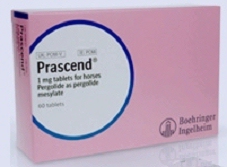
Please report adverse reactions to Prascend

3/12/2013

21 Comments

 
Important - please report any suspected adverse reactions to Prascend.

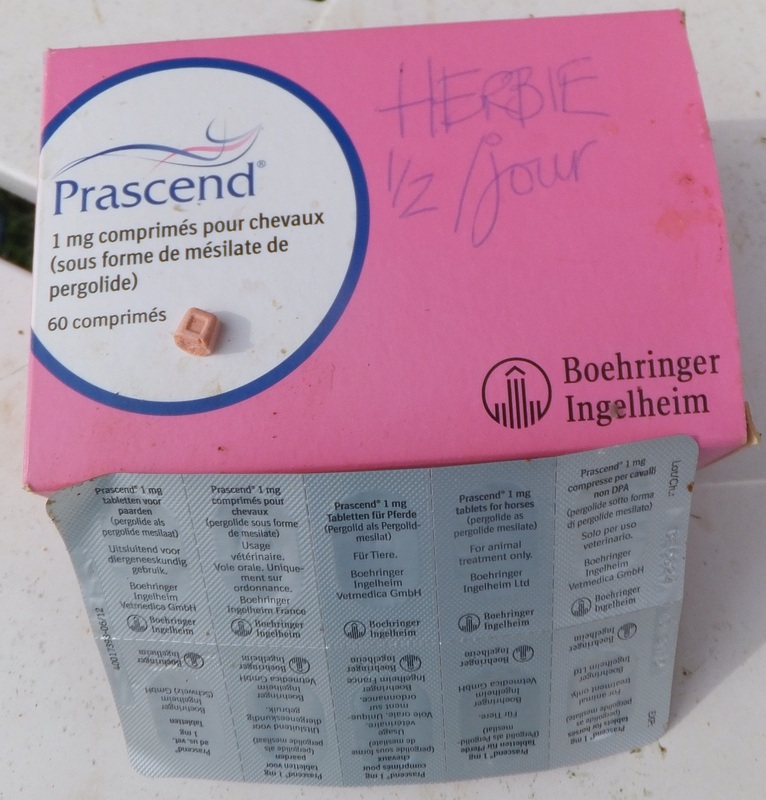
Many owners inform us that their horses have shown symptoms of the "pergolide veil" - when horses go off their food and/or become depressed or lethargic soon after starting pergolide/Prascend - and we have had the occasional report of horses seeming to develop mild diarrhoea or colic which is perhaps linked to pergolide treatment.
Picture
Boehringer Ingelheim, the drug company that makes Prascend, would like owners to report any suspected adverse reactions to Prascend, either to your vet (and ensure that he/she reports it), or direct to Boehringer Ingelheim.

If you message BI yourself, please give the name and contact details of your vet, your full name and contact details, the name, age, breed and approximate weight of your horse, the date the treatment started, the dose of Prascend given, the date you noticed the reaction, for how long you noticed the reaction, the outcome and a description of what happened. BI will ensure these reports are followed up and reported to the Veterinary Medicines Directive.

We know that these adverse effects can be quite common and usually pass quickly, thanks mostly to the ECIR group who have been recording these effects for many years and coined the phrase "pergolide veil". However, it is very important that the drug companies and licencing authorities are also informed, so that any problems can be fully investigated and hopefully advice given to lessen the chances of any adverse effects being seen.

Pergolide appears to be an extremely effective and safe drug, there are horses on the ECIR group who have been on pergolide for 10 years and more, quite a few at high doses (over 5 mg/day), with no problems whatsoever. However, the pathology of PPID, the pharmacokinetics of pergolide and the interactions of neurochemicals and hormones make this an incredibly complicated area of medicine, so it's no wonder there can be a few "teething problems" when first starting treatment. Accurately reporting any problems experienced will almost certainly lead to more knowledge and improvements in the future - so please do it!


NB many owners in the USA have avoided pergolide veil symptoms when using APF at the same time as introducing pergolide - see Pergolide - ECIR Group.  APF can now be bought in the UK from ForagePlus.
21 Comments

Splitting Prascend tablets

25/11/2013

4 Comments

 
The ECIR group recommends slowly increasing the dose of pergolide when introducing it, ideally in 0.25 mg increments - see www.ecirhorse.org - Pergolide.

And the Equine Endocrinology Group now also recommends introducing Prascend gradually:
"Some horses show a transient reduction in appetite. It is therefore recommended that PRASCEND be introduced gradually by giving partial doses for the first four days or by administering half the dose morning and evening."

Prascend comes in 1 mg tablets scored in half for easy division into 0.5 mg doses. If you need to divide tablets into 4 (for small ponies or for tapering the dose in 0.25 mg increments), talk to your vet to discuss options.  It is important that tablets are split accurately, and vets sometimes suggest using a pill cutter/splitter.

Other suggestions for dividing Prascend tablets may not be safe or effective - always ask your vet and check the datasheet - NOAH Compendium - Prascend.
Picture
Half of a 1 mg Prascend tablet
The following suggestions for administering 0.25 mg Prascend (as seen on the internet) are not recommended:

Dissolving 0.5 mg tablet in a small quantity of water and giving half one day and the remaining half the next day - the datasheet states that if dissolving the tablet in liquid, the whole amount should be administered immediately.

Giving 0.5 mg every other day - the datasheet states that Prascend should be given once daily. As the average half life of pergolide has been found to be around 6 hours in horses, extending the time between doses seems counter-intuitive.
Wright, Abra M
Pharmacokinetics of Pergolide in normal mares 
MSc Thesis 2009 Kansas State University

Cutting 0.5 mg half tablets into two with a knife - cutting the pills with a knife risks crushing/wasting some of the tablet (the datasheet states that tablets should not be crushed), as well as operator injury (and many horses seem to hate the taste of blood)!

Keep your fingers safe and your horse's medication effective - if you have to divide tablets, use a pill splitter.
4 Comments

Measuring Collateral Grooves

6/11/2013

1 Comment

 
What are collateral grooves and why measure them?
From Pete Ramey - Understanding the horse's sole:
"The seams between the sole and frog; the collateral grooves, are the most reliable and important guide we have for determining the needs of the foot. A full understanding of their significance and the information they offer will give you “x-ray vision” when you look at every hoof."

The pedal/coffin bone (P3) is dome-shaped on the bottom and covered with a 2-6 mm corium containing blood vessels and nerves.  The sole covers this and provides protection - simply put, the thicker the sole, the more protection.  So it is important to be able to estimate sole thickness.

In his book "Care and Rehabilitation of the Equine Foot", p 286, Pete Ramey suggests that the bottom of the collateral groove is fairly consistently around 10 mm (of sole) from the solar corium, so the collateral grooves can give an indication of the position of P3.  In the few cases where we have been able to measure collateral groove depths and have x-rays taken, we have found the collateral groove measurements have given a good indication of the palmar angle of P3 - more on this another day!

How to measure collateral groove depths

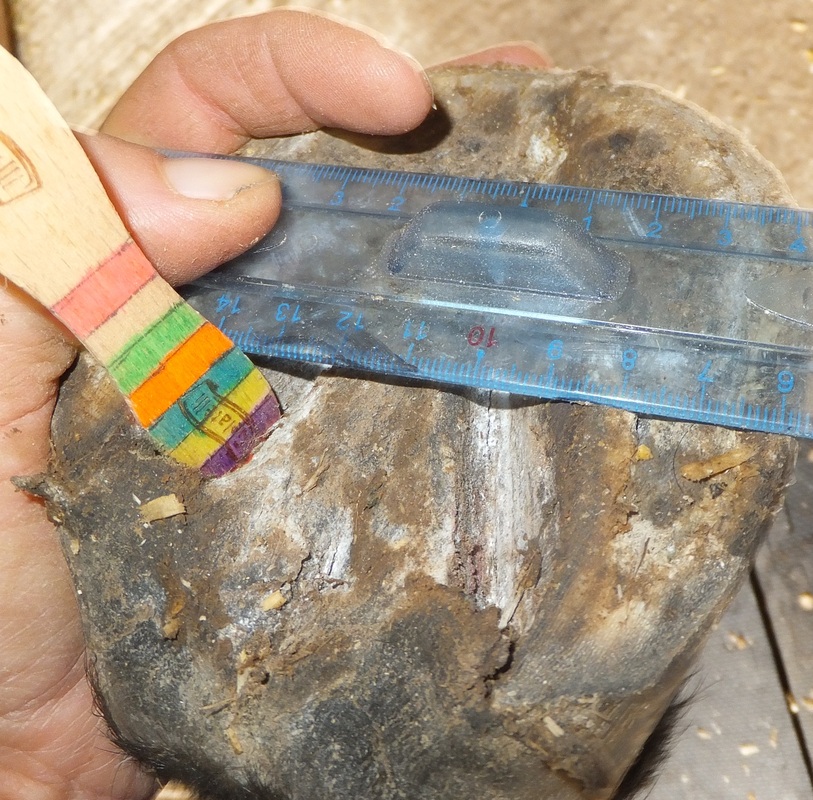
Use something hard, flat and even, like a rasp or metal ruler, to lay across the top of the hoof from side to side, and a measuring stick or hoofpick to measure the depth from the bottom of the collateral groove to the flat object.

The collateral groove depth should be measured from the bottom of the collateral groove to the junction of the sole with the wall.  So if you have wall height above the sole, you will need to take this wall height off the measured depth, to calculate the true depth.
Picture

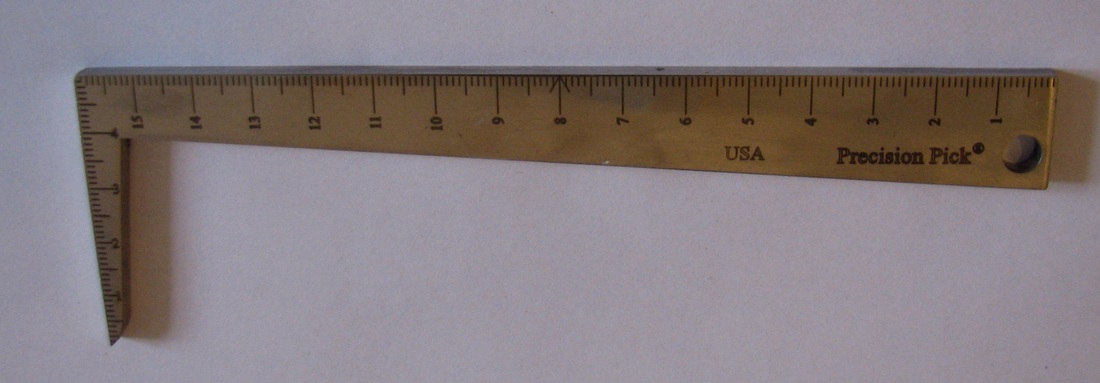
The Precision Hoof Pick website has a good explanation of how to measure collateral groove depths with photos, and the Precision Hoof Pick is an excellent tool for taking accurate measurements.

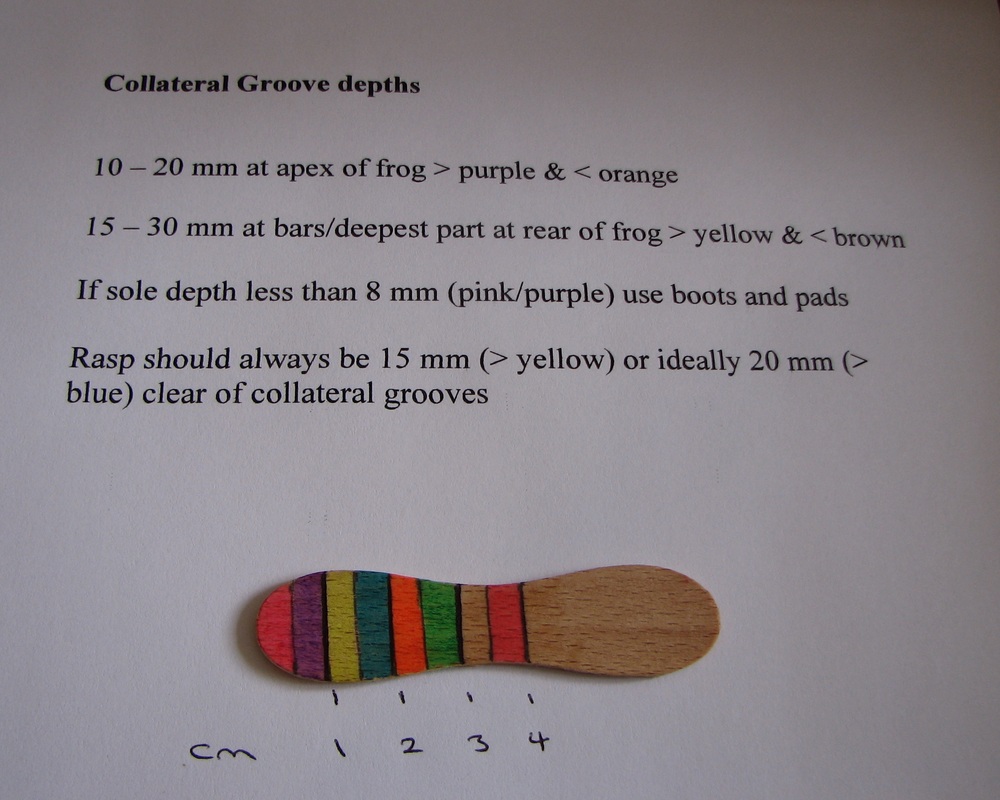
You can make a collateral groove depth measuring stick very easily with a lolly stick, some coloured pens and a ruler - the stick below is coloured in 0.5 cm increments, the same on both sides.
Update: TLS now prefers to use something narrower to really get down into the collateral groove - such as a wooden kebab stick.

The Hoof Evaluator, although a bit expensive, looks very useful for measuring collateral groove depths and other measurements on the foot.

Another suggestion is to use a clench: 
Alternative Uses of a Horseshoe Nail by Christoph Schork - EasyCare Inc
Picture
Picture

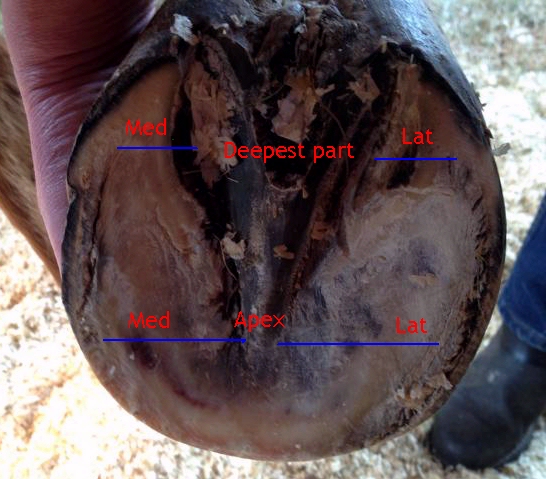
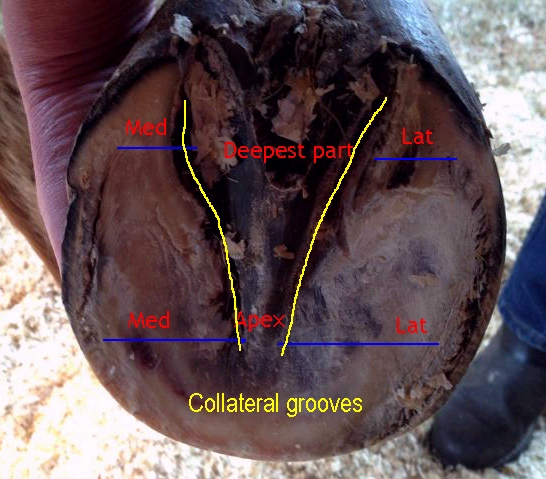
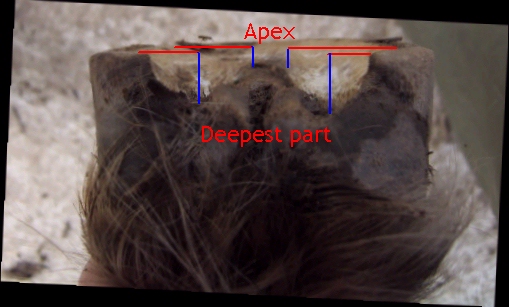
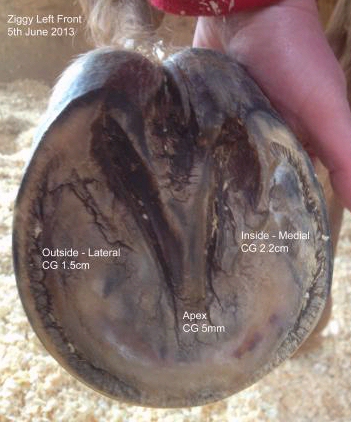
Measure the collateral grooves at the deepest part, which is normally towards the back of the foot, in line with the bars (deepest part/bars), and at the apex/tip of the frog (apex). Measure both sides of the frog - this tells you whether the foot is balanced from side to side.    
Picture


Picture
The Precision Hoof Pick - cms marked along both arms of the pick, inches on the other side.
Picture
How deep should the collateral grooves be?

Pete Ramey suggests that collateral groove depth should normally be: 
10 - 20 mm at the apex of the frog 
15 - 30 mm at the deepest part towards the rear of the frog/beside the bars.
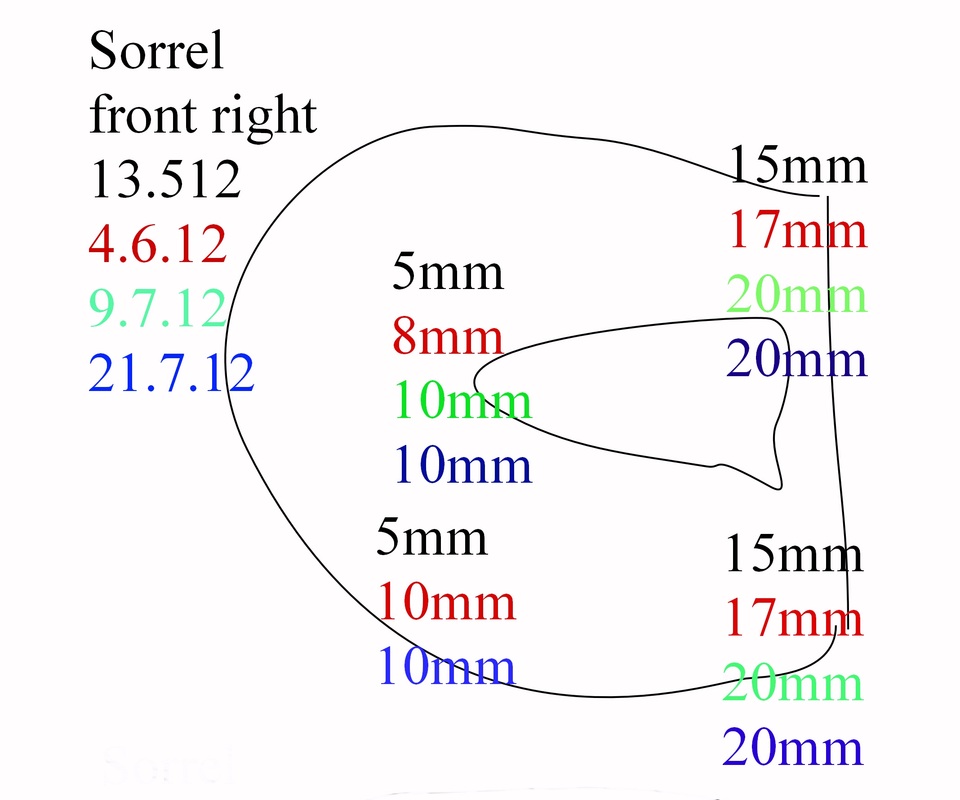
These are some of the ways TLS rehabs have recorded their collateral groove depths:
Picture
Picture
If you have less than 8 - 10 mm collateral groove depth, always use boots with thick pads or keep the horse on deep soft conforming bedding to protect the sole until the sole has thickened.

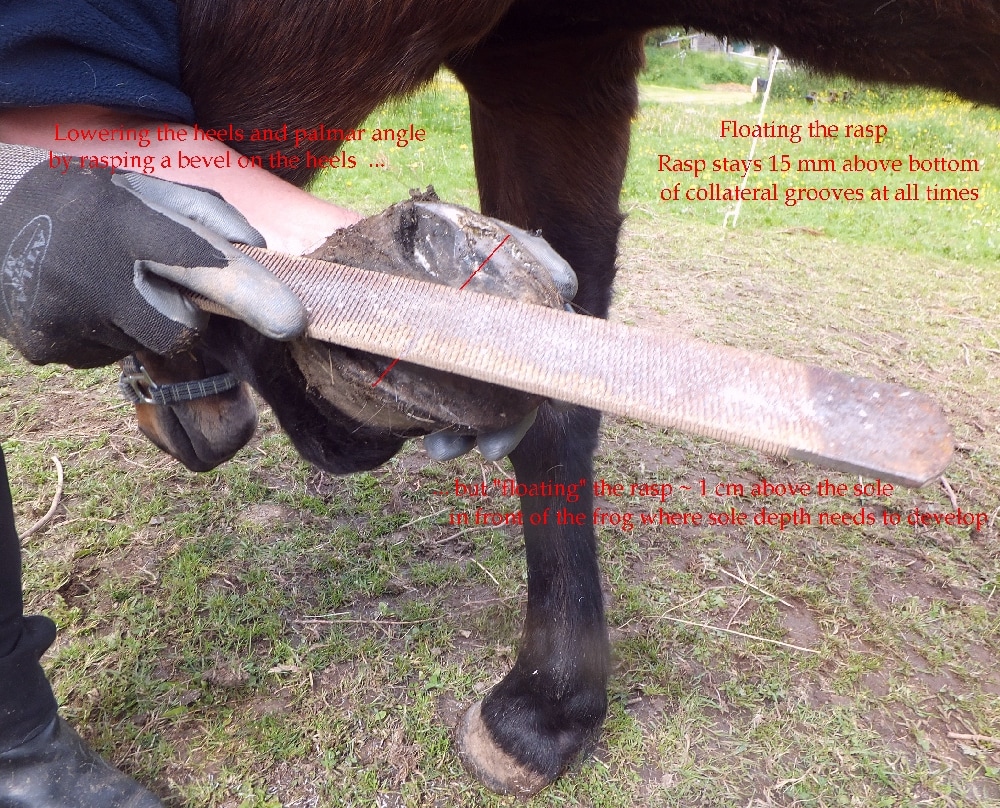
​When trimming, always keep the rasp 15 mm above the bottom of the collateral grooves - this may mean floating the rasp in the air.  For an excellent demonstration of floating the rasp above the toe, watch Linda Cowles' ml Trim4 video (from around 3.30 minutes in).
Picture
How collateral groove depths can be used to guide the trim

What if the collateral groove depths do not fall into the "ideal" 10-20 mm at the apex, 15-30 mm at the bars, the depth at the apex is less than the depth at the bars, or the measurements are not the same on both sides of the frog?

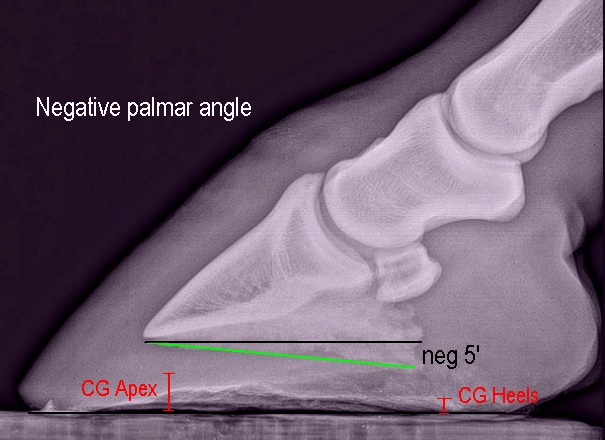
1.  CG depth at the apex is greater than CG depth at the bars (so the "deepest part" isn't the deepest part!).
This could indicate a negative palmar angle, that the heel is too low, or that there is too much sole depth in front of the frog.  Reassess the trim and if necessary have x-rays taken.  See What to Know About Trimming the Toe... by Maria Siebrand - EasyCare Inc.
Picture
Picture
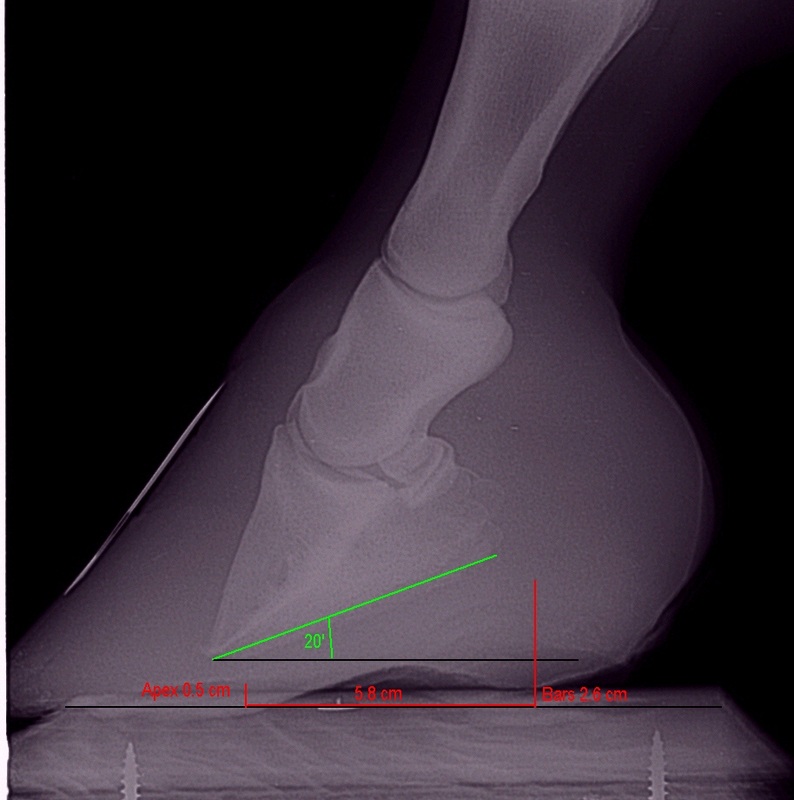
2.  CG depth at the deepest part/bars is much greater than CG depth at the apex.
If the depth at the deepest part is much more than the depth at the apex (in our experience, usually more than around 1 cm difference), this could indicate too large a palmar angle, or rotation due to laminitis.  Again, reassess the trim and if necessary have x-rays taken. 
Picture
3.  CG depth is not the same on both sides of the frog.
If the CG depth (this will usually be the deepest part/bars measurment) on one side of the frog is different to the CG depth at the same point on the other side of the frog, this could indicate medial-lateral imbalance.  Again, reassess the trim and if necessary have x-rays taken (DP x-rays may be required).  See All About Heels by Christoph Schork and Balanced Horse, Balanced Hoof - EasyCare Inc.
Picture
In some feet the collateral grooves cannot be easily identified at the front of the foot, because the frog has migrated forward into the sole.  Reassess trim.  See Live Sole and Then Some by Christoph Schork - EasyCare Inc.
The science

Researchers at Auburn University looked at the relationship between the external characteristics of the collateral grooves of the hoof capsule and the internal hoof structure on dissected feet.  They noted that the collateral grooves appear to run parallel to and a fixed distance from the solar surface of P3 in the front (dorsal) half of the foot, and the same distance from the base of the lateral cartilages in the back (palmar) half of the foot, and that the orientation of the collateral groove in the front half of the foot parallels the palmar angle of P3.  Based on Pete Ramey's findings, they suggested that in a healthy foot with adequate sole depth, the collateral groove depth at the frog apex should be around 10-20 mm from the ground.  

They measured 96 feet and compared the measurements to lateral x-rays, and found that the depth of the collateral groove at the frog apex was highly associated with sole depth, distance of P3 from the ground, and palmar angle, as measured on the x-rays.
​
​Rouben CM, Taylor DR, Degraves FJ, Schumacher J, Guidry LN
Evaluation of the shape and depth of the collateral groove of the foot as a method to predict the position of the distal phalanx within the hoof capsule
Phi Zeta Research Day Forum 2012 p 34

References and more information

Important - please read Pete Ramey's article Understanding the Horse's Sole thoroughly before you start using collateral groove depths to guide trimming, and/or chapter 16 Evaluating and Trimming the Sole in Care and Rehabilitation of the Equine Foot.
And ideally also One Foot For All Seasons? by Pete Ramey

See also:
Measuring Uniform, Adequate Sole Depth Using the Collateral Grooves - The Thoughtful Horseman

Collateral Groove Depth and Sole Concavity - Precision Hoof Pick

1 Comment

General Laminitis Quiz

3/11/2013

0 Comments

 
Here are the answers for TLS' first quiz - the General Laminitis Quiz - correct answers in bold:

Q1.  Which is the most common "type" of laminitis
Endocrine laminitis - 61% got this correct
Supporting limb laminitis
Systemic Inflammatory Response Syndrome (SIRS) laminitis

Explanation:
www.thelaminitissite.org/laminitis
"It is currently thought that around 90% of cases of laminitis have an endocrine cause (Karikoski et al. 2011) , either Equine Metabolic Syndrome or Pituitary Pars Intermedia Dysfunction/Cushing’s, 
and that pasture associated laminitis is an endocrine disorder in which horses (particularly ponies) have an abnormal insulin response to the sugars in grass."  

Q2.  A good daily check that can help early identification of laminitis?
Walking on hard ground/turning a tight circle - 72% got this correct
Checking body temperature/respiration rate
Walking a 20 m circle each way
Asking the horse to back up

Explanation:
www.thelaminitissite.org/laminitis
"Symptoms of laminitis include:
Feeling “footy” - preference for soft ground 
Reluctance to turn"

"Daily checks that can help early identification of laminitis:
  • Walk on hard ground e.g. concrete - does the stride shorten, does he/she seem at all "pottery"?
  • Turn in a tight circle - normal or reluctant to turn/stiff behind?
  • Digital pulses - normal?
  • Regional fat pads - cresty neck, bulges in hollows above eyes, enlarged sheath, fat above tail?  Hardening of neck crest or increase in any of these fat deposits can indicate imminent laminitis."

Q3.  Which blood tests are recommended if a horse has a history of laminitis?
Insulin, ACTH, glucose - 65% got this correct
Glucose, cortisol, ACTH
Insulin, cortisol, TRH
Glucose, TRH, ACTH

Explanation:
www.thelaminitissite.org/laminitis
Management of laminitis:
"Diagnose the cause – test blood for insulin & glucose EMS plus ACTH for PPID"

Insulin provides information about hyperinsulinaemia/insulin resistance, which diagnoses EMS and indicates laminitis risk.
ACTH diagnoses PPID.
Glucose, although not essential, can add information - glucose can be raised in horses with PPID and in diabetes, which is very rare in horses.
Cortisol used to be considered diagnostic for PPID, but that has since been disproven.
TRH itself isn't tested, but the TRH stimulation of ACTH may be used to diagnose PPID - in which case it is ACTH that is tested.

Q4.  Correct emergency treatment for laminitis?
Call vet, remove from grass, support feet if necessary, confine on deep supportive bedding - 93% got this correct
Call vet, allow access to grass, remove water, encourage to walk
Call vet, remove from grass, remove water, confine on bare concrete floor
Leave in field, give antibiotics and pain killers, encourage to walk

Explanation:
www.thelaminitissite.org/laminitis
"Emergency treatment for laminitis
  • call vet (and farrier/trimmer)
  • remove horse from grass (but move as little as possible/support feet before moving)
  • confine on deep supportive bedding e.g. sand, sawdust, pea gravel
  • support the feet if the bedding isn’t sufficient to do this, e.g. with styrofoam, impression material, boots and pads
  • give NSAIDs e.g. Bute, Danilon, Equioxx for the inflammation & pain (for as short a time as possible)
  • apply cold therapy to the feet to reduce inflammation and pain (but not if cold-induced laminitis/feet cold)"

Never encourage a horse with active laminitis to walk.  There is no reason to remove water - laminitic horses should always have access to water.   Antibiotics have no place in laminitis treatment, unless a bacterial infection is causing the primary illness leading to SIRS laminitis.

Q5.  The Laminitis Site's philosophy for treating laminitis?
Identify and remove/treat the cause, support and realign the feet - 93% got this correct
Give the pills, raise the heels
Find the cause, shoe the horse
Support and realign the feet and the cause of the laminitis will disappear

No explanation needed here - TLS believes that if you identify and remove/treat the cause and support and realign the feet, you'll sort out most cases of laminitis - great that so many people got this one right!
www.thelaminitissite.org/

Q6.  What is the maximum NSC % generally recommended when feeding a laminitic?
10% - 66% got this correct
5%
20%
25%

Explanation:
www.thelaminitissite.org/laminitis
Management of laminitis
"Feed low NSC (<10%) diet based on grass hay (+ protein, minerals, vitamins, linseed?) -do not starve"  
The idea of 10% seems to have come from the ACVIM consensus statement on EMS - see under Dietary Management.

Q7.  Which statement is true?
All/any feet can be affected by laminitis - 95% got this correct
Only the front feet are affected by laminitis
A single foot can't be affected by laminitis
Laminitis in all 4 feet is very rare

Explanation:
Nearly everyone knew that laminitis can affect all/any feet.  Endocrine and SIRS laminitis are systemic, they affect the whole body, therefore all 4 feet have a chance of developing laminitis - more details here:
Can a horse get laminitis in any foot? - TLS forum

Q8.  Signs of previous laminitis episodes in the feet include:
Hoof rings wider at the heel, stretched or deep white line - 83% got this correct
Hoof rings wider at the toe, tight white line

Explanation:
www.thelaminitissite.org/laminitis
"Symptoms of chronic laminitis:
Hoof rings wider at the heel 
Stretched white line - deep black groove between wall and sole - laminar wedge"

Q9.  What are the 3 components of EMS?
Obesity/regional adiposity, hyperinsulinaemia/IR, predisposition to laminitis - 56% got this correct
Diabetes, hyperglycaemia, predisposition to laminitis
Obesity/regional adiposity, hyperglycaemia, hirsutism
Diabetes, hyperinsulinaemia/IR, hirsutism

Explanation:
EMS was defined by the ACVIM consensus statement on EMS as including obesity/regional adiposity, IR or hyperinsulinaemia and a predisposition towards laminitis.
Diabetes is very rare in horses, and horses with EMS very rarely have above normal glucose (hyperglycaemia). 
Hirsutism is diagnostic of PPID, not EMS.

Q10. PPID is initially thought to be caused by
The degeneration of dopamine-producing neurons that control hormone production in the pituitary gland - 54% got this correct
Excess cortisol production from the adrenal glands
A tumour in the pituitary gland
A tumour in the adrenal glands

Explanation:
www.thelaminitissite.org/ppid
"In a healthy horse, dopamine producing neurons from the hypothalamus release dopamine into the pars intermedia.  The dopamine acts as a brake and stops hormone production.
With PPID the neurons are slowly lost (PPID is a neurodegenerative disease - it gets progressively worse) and the reduction in dopamine (there can be up to 9 times less dopamine in the pars intermedia of a horse with PPID than a healthy horse of the same age) causes:
the production of POMC peptide hormones (alpha-MSH, beta-endorphin, CLIP and ACTH) to increase - hormone levels may be more than 100 times greater than in a normal horse;"

It is now known that most horses with PPID don't have above normal cortisol production, and adrenal hyperplasia (increase in cells) and adrenal tumour formation is not commonly seen.  Excess cortisol production is associated with Cushing's disease in humans and dogs - not horses, that's why the disease in horses is now called PPID.
Although a tumour or adenomas can develop in the pituitary gland, this is thought to be as a result of the loss of dopamine-producing neurons and the consequent increase in hormone production, so is not the initial cause.  A difficult question that over half got right - well done!

Q11. Laminitis in the ................... is particularly suggestive of PPID
Autumn - 52% got this correct
Spring
Summer 
Winter

Explanation:
www.thelaminitissite.org/s - see Seasonal Rise:
"Horses that are developing PPID often first present with unexplained autumn laminitis long before coat changes are seen, and any horse having unexplained laminitis for the first time in the autumn should be tested for PPID by testing ACTH".  Sorry, should have said "Autumn/fall" to be international!

Q12. Cortisosteroids increase insulin levels - true or false?
True - 83% got this correct
False

Explanation: 
Am J Vet Res. 2007 Jul;68(7):753-9. (PubMed)
Effects of dexamethasone on glucose dynamics and insulin sensitivity in healthy horses 
Tiley HA, Geor RJ, McCutcheon LJ
"The study revealed marked insulin resistance in healthy horses after 21 days of dexamethasone administration. Because insulin resistance has been associated with a predisposition to laminitis, a glucocorticoid-induced decrease in insulin sensitivity may increase risk for development of laminitis in some horses and ponies." 

And many more examples of corticosteroid causing increases in insulin levels and laminitis here:
http://www.thelaminitissite.org/d.html - under Dexamethasone Suppression Test
http://www.thelaminitissite.org/c.html - under Corticosteroids
0 Comments

Body Condition Scoring Video

25/10/2013

0 Comments


A practical guide to body condition scoring horses - Dr Teresa Hollands 

This video by Dr Teresa Hollands - as shown in the October 2013 The Laminitis Revolution 2 webinar - shows how to body condition score your horse, using the modified 0-5 point scoring system . Horses that are too thin, too fat and just right are used to demonstrate how to assess BCS, including a typical underweight PPID horse and a typical overweight EMS/PPID pony.

The body should be divided into 3 sections: neck, middle and bottom, and each section scored separately by feeling for fat over the skeleton. 3 is the perfect score. Body condition scoring should be carried out ideally every 2 weeks on all horses, and the results recorded.

Neck - there shouldn't be any fat or crest above the nuchal ligament - there is no muscle above the nuchal ligament, anything felt here is fat, not top line. A large crest will score 4 or more, bulges and corregation in the crest will probably score 5.
The shoulder blade should be well defined - if you run your hand down the side of the neck, it should come to a stop at the shoulder blade.

Middle - you should be able to feel the ribs, like feeling stair banisters through a velvet curtain, but hardly see them. If you can neither see nor feel the ribs, that scores 4 or more. 
If you place your hand over the backbone, it should form a nice curve - a triangle is too thin, flat is too fat.

Bottom - you should be able to feel just feel the top of the pelvis, the hip bone and the tail bone. If you can't see or feel these bones, that scores 4 or more.

Research has shown that if a horse is overweight, for the all fat that is visible or can be palpated under the skin, there is probably the same amount inside the horse that can't be seen, wrapped around the organs and killing the horse from the inside.

In summary, if you can feel AND see bones, the horse is too thin.
If you can neither feel nor see bones, the horse is too fat.
If you can feel but not see bones, the horse is just right.
0 Comments

Video comparing PPID symptoms and normal aging

25/10/2013

0 Comments


Clinical symptoms of PPID v signs of normal ageing - Dr Jo Ireland

Dr Jo Ireland demonstrates some of the symptoms of PPID and explains how to differentiate between normal ageing changes and changes that should make you suspicious of PPID. This video was shown in the October 2013 The Laminitis Revolution 2 webinar.

It's not uncommon for horses to have a deepening of the hollows above their eyes, more grey hairs around their head and some loss of muscle tone as they get older.

However, pronounced muscle loss along the neck, back and over the hind quarters is suggestive of PPID, as is the development of a pot belly.

The long curly hair coat that doesn't shed is a classic sign of PPID, but this is usually only seen in advanced cases. Warning signs for PPID include more subtle hair coat abnormalities, such as the summer coat being longer or thicker than normal, or long dull coarse hairs in the coat.

Patchy sweating can also suggest PPID, this may be due to an excessively long and thick coat, but can be seen in horses with PPID that have normal coats as well.

Horses with PPID may show signs of chronic laminitis, such as divergent hoof rings.

A common indication of PPID is accumulation of fat under the lower eyelid, giving a puffy appearance to the lower eyelid, and fat may also sometimes be seen in the hollows above the eyes.

Horses with PPID often show few symptoms in the early stages and symptoms vary between horses. If you are at all worried, talk to your vet.

For more information about the clinical signs of PPID, diagnosis and treatment, see Pituitary Pars Intermedia Dysfunction.

0 Comments

Care and Rehabilitation of the Equine Foot in paperback

18/10/2013

0 Comments

 
Pre-sale has begun on a newly edited paperback version of the book Care and Rehabilitation of the Equine Foot for $90. The high-quality paper and stitched binding has been kept, but with the new soft cover it weighs less than four pounds, meaning that international customers will enjoy much cheaper shipping rates. Pre-sale books should be mailed next week. 

TLS recommends that everyone involved in the trimming and rehab of a horse with laminitis has - and reads - this book! See TLS's review of the book. 
0 Comments

Pete Ramey articles in Horseback Magazine

18/10/2013

0 Comments

 
Articles about coffin/pedal bone rotation/sinking by Pete Ramey that recently appeared in Horseback Magazine.

Recognizing Coffin Bone Rotation

Sinking Coffin Bones

How to Reverse Coffin Bone Sinking

The full list of Pete's articles to date for Horseback Magazine
0 Comments

Neurological Symptoms and PPID

12/10/2013

0 Comments

 
Information about neurological symptoms relating to PPID has been added to the website. Ataxia (weakness/inconsistent gait), blindness, seizures and narcolepsy have been associated with advanced PPID. Blindness has been suggested as being caused by adenomas (tumours) in the pituitary gland compressing the optic nerves, but there doesn't appear to be a known connection between other neurological symptoms and PPID. TLS queries whether direct trauma to the head/brain could play a part in both PPID and these rare neurological symptoms.
0 Comments

McFarlane 2011 Equine PPID

12/10/2013

0 Comments

 
Dianne McFarlane
Equine Pituitary Pars Intermedia Dysfunction
Veterinary Clinics of North America: Equine Practice, Vol 27, 

The majority of Dianne McFarlane's excellent review of PPID from 2011 can be read on Google books, covering the anatomy and physiology of the equine pituitary gland, epidemiology, pathophysiology and clinical signs, and the start of the section on diagnostic tests for PPID. Not much has changed since 2011, although it's worth bearing in mind that autumn (Aug-Oct) is now considered by many to be the best time to test ACTH to diagnose PPID, as long as a seasonally adjusted reference range is used. Also, no doubt due to increased testing and awareness, horses aged 10 and under are being diagnosed with PPID, and there is thought to be no breed or gender predilection.

McFarlane goes on to say that measuring ACTH and alpha-MSH are useful in the diagnosis of PPID (measuring ACTH is now the most widely used test for PPID in the UK), and that the TRH stimulation of ACTH may be useful (compared to measuring cortisol - further research has been done since McFarlane's paper was published and the TRH stimulation of ACTH is now recommended as a second-tier test when resting ACTH results are equivocal). Insulin is suggested as being increased in around 60% of PPID horses, and monitoring fasting insulin is recommended for all PPID horses to predict laminitis risk. It is suggested that cortisol circadian rhythm loss, urinary cortisol/creatinine ratio and ACTH stimulation test are poor tests for diagnosing PPID. Treatment suggestions include aggressive preventative health care (tooth and hoof care, nutrition, parasite control, clipping, rugging, shelter), and treatment with pergolide. Cyproheptadine is mentioned for possible use in combination with pergolide when pergolide alone doesn't control clinical symptoms, and Trilostane for possible use in horses with hypercortisolemia. Natural remedies, specifically Vitex agnus castus, are warned against due to the lack of evidence of efficacy and safety.

Points we found of particular interest:
Alpha-MSH (increased in horses with PPID) is a potent anti-inflammatory - some owners report increased signs of arthritis and similar problems when horses start treatment with pergolide - is this because "natural" anti-inflammatory levels are reduced?
Similarly beta-endorphin (also increased in horses with PPID) has pain relieving and anti-inflammatory effects.
CLIP (another hormone increased in horses with PPID) stimulates the release of insulin in rodents - this hasn't been studied in horses. Could this be causing laminitis in horses with PPID?
20% of horses testing positive for PPID using ACTH and/or alpha-MSH had no clinical signs of disease - did they really have PPID or were these false positives? We are often asked whether horses with above normal ACTH results but no clinical symptoms should be treated.
McFarlane suggests it would be interesting to study the geographical incidence of PPID cases, and that finding a pattern might suggest that environmental exposures may predispose to PPID, as exposure to agricultural chemicals has been shown to predispose to Parkinson's disease in humans. We know of several owners/yards with what appears to be a greater than normal number of PPID horses - are environmental/management factors involved?
It's now well accepted that PPID is a dopaminergic neurodegenerative disease, and that oxidative stress may contribute to neuronal damage and death.
The mechanisms causing the symptoms of PPID are mostly not understood.
"It is conceivable that PPID is a collection of syndromes each with a unique set of clinical signs and hormone profiles" - this may explain why horses with PPID can have such different symptoms and blood test results, and emphasises that each horse must be treated as an individual. It is also unlikely that one testing method will be ideal for every case of PPID.
Obesity and insulin resistance cause oxidative stress, which may cause PPID. 
Alpha-MSH, beta-endorphin and ACTH all suppress the immune system, possibly causing the increase in infections and parasite burdens often seen in horses with PPID.
Horses with PPID are often lethargic - this could be because of insulin resistance, other diseases due to PPID, or increased beta-endorphin levels.
PPID horses with laminitis often appear to have low-grade laminitis, but this may be because their pain threshold is higher due to increased beta-endorphin levels. They could still be at risk of significant damage.
The diagnosis of PPID is not straightforward!
False negative test results are common in the early stages of PPID, and it is likely that significant effects of the disease have already occurred by the time tests diagnose PPID.
If a horse shows symptoms of PPID but blood tests are negative, repeated testing is recommended.
At post mortem, the pituitary gland of a horse with PPID can be 2 to 5 times the normal size, and compression of other parts of the pituitary gland and rarely the optic chiasm (through which the optic nerves pass) and the hypothalamus can be seen. Evidence of damage may be seen in other organs such as the heart, liver, kidneys and lungs.
And finally, to end on a positive note: "when well cared for, horses with PPID can live into their 30s and even 40s".

For notes of Dianne McFarlane's presentation at the Equine Endocrinology Summit 2011 and a link to view the presentation, see: http://thelaminitissite.myfastforum.org/about126.html
0 Comments

Pharmacokinetics of Pergolide Mesylate in Horses - Rendle et al. 2013

12/10/2013

1 Comment

 
New research by David Rendle et al. into the pharmacokinetics of pergolide was published in the Equine Veterinary Journal supplement Clinical Research Abstracts of BEVA September 2013. 

Rendle DI, Hughes KJ, Doran G, Edwards S
Pharmacokinetics of Pergolide Mesylate in Horses
Equine Veterinary Journal Volume 45, Issue Supplement S44, page 19, September 2013

8 healthy horses were given 0.02 mg/kg bodyweight pergolide intravenously - this is the equivalent of 10 mg for a 500 kg horse - ten times the recommended starting dose of 0.002 mg/kg bw, or 1 mg/500 kg horse. The abstract doesn't say whether it was a one off dose - presumably it was. Blood was analysed for pergolide concentrations for 48 hours following administration. 

The mean half life was 5.8 +/- 2.26 hours - shorter than previously reported, but in line with the mean half life of 5.86 +/- 3.42 hours found by Abra Wright when healthy mares were given 0.01 mg/kg pergolide by mouth after fasting (5 mg/500 kg horse). In Wright's research there was a large variation of half life between horses - from 3.10 to 12.39 hours. There was also a difference in maximum concentration between horses, ranging from 2.11 to 6.20 ng/ml. However in all the horses the pergolide was absorbed quickly, with time to maximum concentration ranging from 0.33 to 1 hour. These results suggest that, as in humans, the metabolism/elimination profile of pergolide varies considerably between treated horses. 

Wright, Abra M
Pharmacokinetics of Pergolide in normal mares 
MSc Thesis 2009 Kansas State University

Rendle concluded that pergolide does not require a loading dose. However giving pergolide twice daily may be more appropriate than once daily.

If this is the case, and the dose currently given once daily would be more effective if split into two doses, surely Prascend tablets need to be capable of being divided into quarters rather than just halves? Or is the suggestion that the daily amount of pergolide split into two doses would be larger than the dose currently given once daily? Good news for Boehringer Ingelheim (by whom David Rendle acts as a paid speaker and consultant) if this research supports giving a larger overall dose!

Both researchers used much larger doses of pergolide than are normally used, the research was carried out on healthy horses, not horses with PPID, only a single dose of pergolide was given in each case, and in both cases the pergolide was not administered in the same way as owners give pergolide - in Rendle's research the dose of pergolide was given intravenously, in Wright's research although the pergolide was given by mouth, it followed an 8 hour fast. So just how relevant is this research in terms of recommending oral dosing of pergolide for horses with PPID?
1 Comment

Claiming hoof boots on insurance

6/10/2013

0 Comments

 
If you are claiming on your horse insurance for laminitis treatment, it's worth asking whether your policy covers the purchase of hoof boots - we've been told that one insurance company (Petplan Equine) has paid almost the full price of a set of 4 hoof boots. And so they should - if they cover remedial shoeing, they should also cover hoof boots and pads for remedial use.
0 Comments

EVA foam pads

29/9/2013

13 Comments

 
Picture
Picture
Picture
Picture
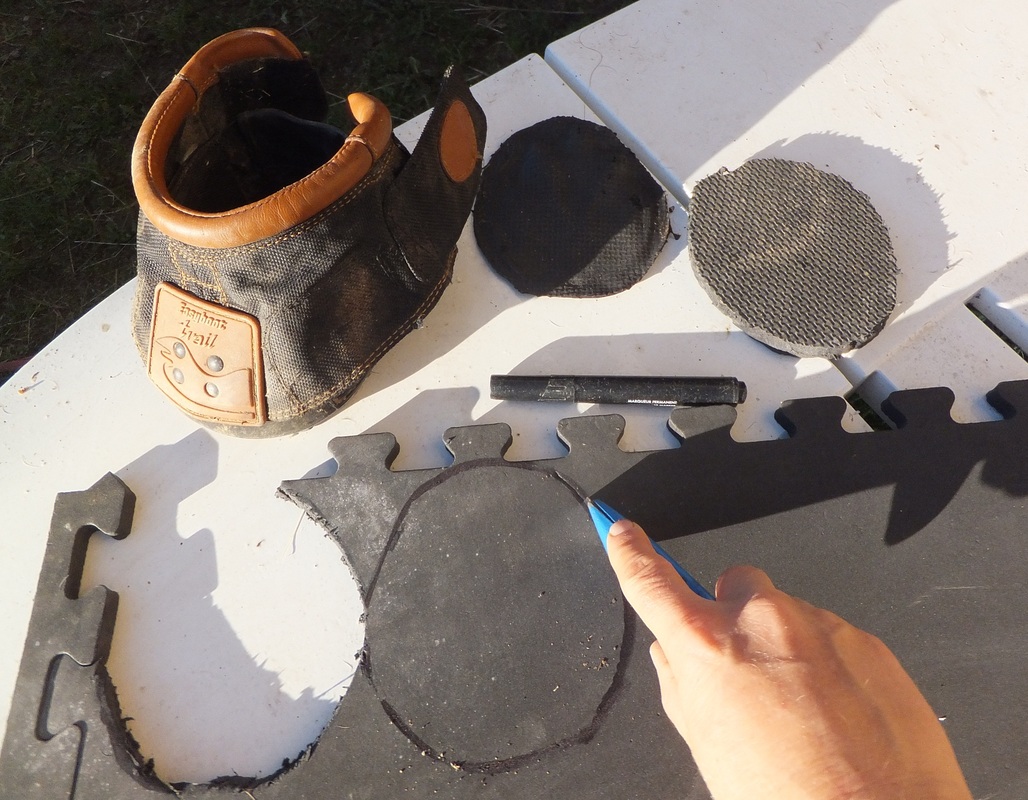
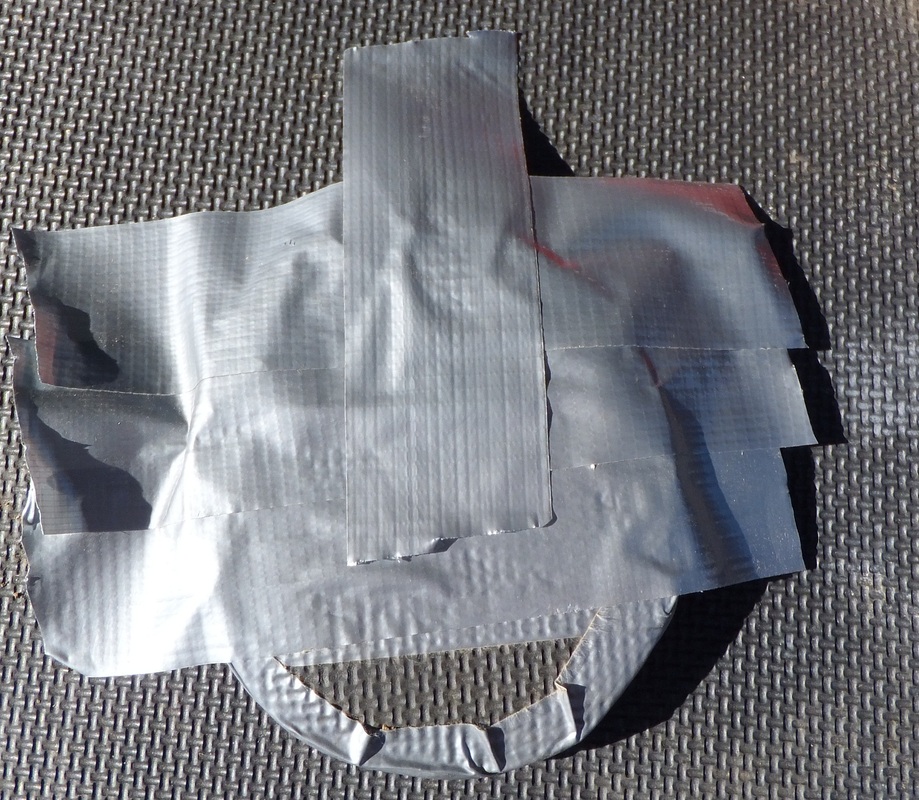
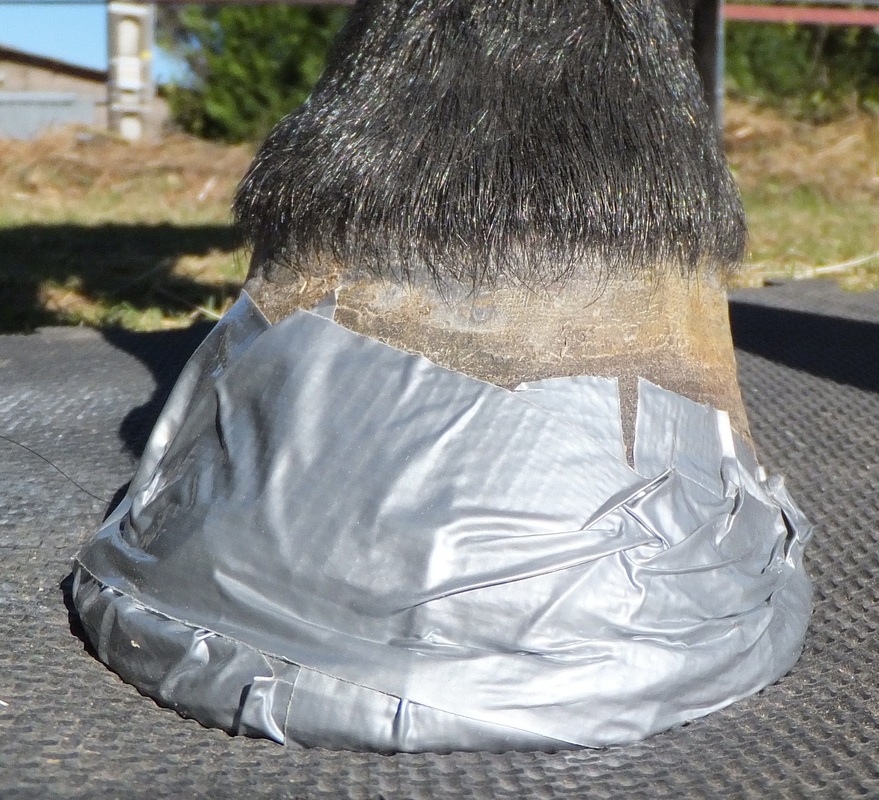
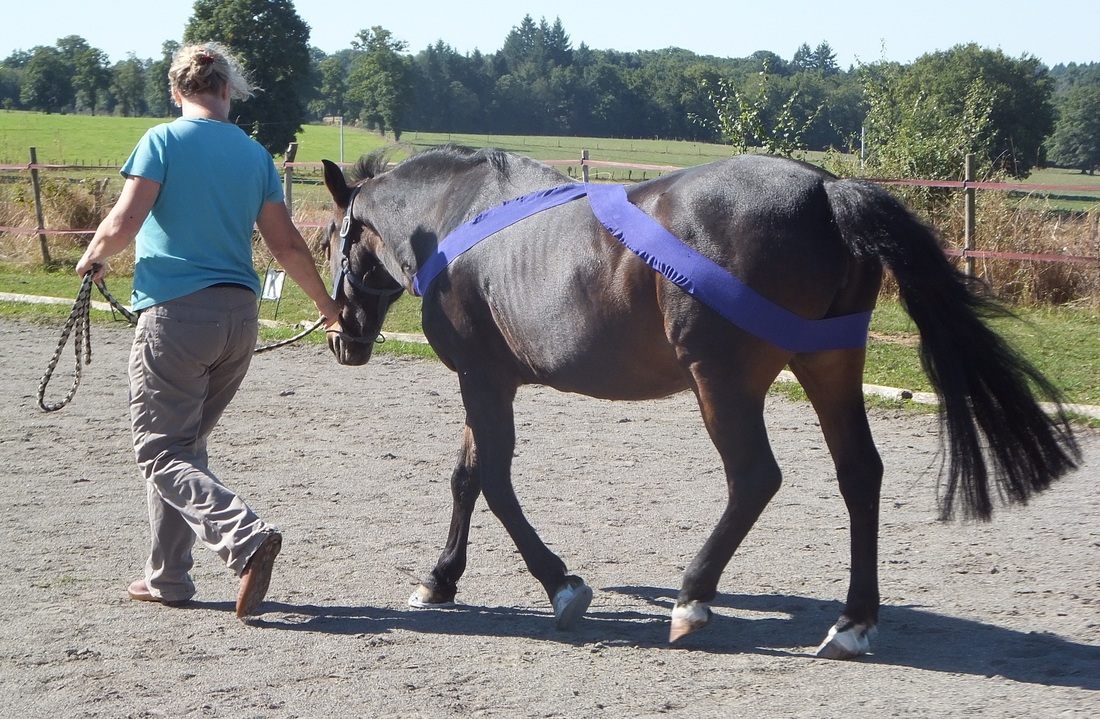
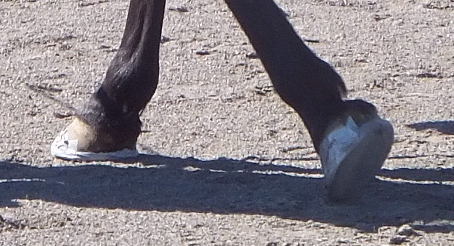
The Laminitis Site has been using 1.3 cm EVA foam mats to make pads to go in hoof boots. When Herbie got a slight heel rub we taped pads directly onto her feet with duct tape, and found this just as effective as boots. After a couple of days the foam compacts, but we found putting a second slightly smaller pad inside the compacted pad extended the life of the pads for several days, and presumably provided good comfort as Herbie has been happy to trot and even have a little canter and buck in her turnout strip! The external pad should generally be just a bit larger than the foot, to ensure the hoof is fully supported.
We use a template of the hoof size, draw round it with a felt tip pen, cut the pad out of the mat with a Stanley knife, apply tape across the bottom of the pad, long enough to extend most of the way up the hoof wall but not to the hairline, then apply the pad to the hoof, stick the tape down and wrap more tape around to secure the pad to the wall, keeping it on the hoof wall and away from the coronet/heel bulbs. 

We have been using 66FIT interlocking mats (http://www.amazon.co.uk/66FIT-Interlocking-Floor-Guard-Peices/dp/B004OW24CM).
We were quite surprised by the increase in comfort Herbie showed when we first put boots with pads on her front feet (we have only used EVA foam pads for Herbie, so can't compare with other pads, but other thick and conforming pads are likely to have similar results), even though she was already on a deep, soft and conforming sawdust bed. She has worn the EVA pads either in boots or directly taped onto her feet ever since apart from a few hours overnight when she is barefoot on sawdust to allow her feet to dry, and I suspect her comfort with these pads has been a significant factor in her rapid return to turnout and exercise. Her feet actually haven't been sweaty with these pads, we'd normally use a medicated powder (e.g. Lanacane) inside boots to help prevent sweating, but haven't needed to.   The only problem we have found is that the pads can be a bit slippery on wet grass.
EVA foam pads are now part of TLS's laminitis emergency kit!

More about Herbie's feet here: http://www.thelaminitissite.org/herbie.html
Picture
The Laminitis Site recommends following Pete Ramey's advice on p 351 of Care and Rehabilitation of the Equine Foot: “at the first signs of laminitis, restore P3 to a more natural ground plane” (so 3-5 degree palmar angle), “relieve pressure on the walls and pad the sole with foam rubber – vertical sinking and destructive pressure to the solar corium can be prevented”.

If laminitis is suspected or diagnosed, the feet should be supported/protected, x-rayed and realigned (if necessary) as soon as possible.  For more information, see Laminitis and the Feet.
13 Comments

Bring & Buy raises funds for TLS

28/9/2013

0 Comments

 
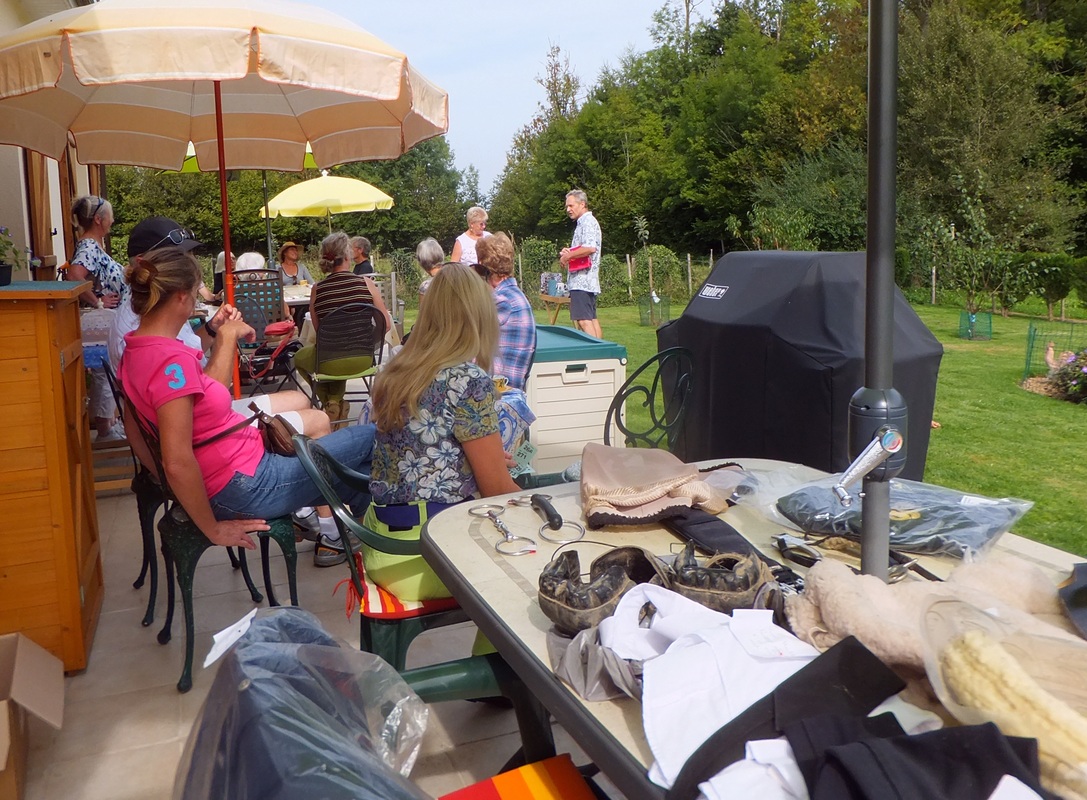
The Bring & Buy/Tea Party at Champsac yesterday raised 194.13 euros (around £160) for The Laminitis Site, and 150 euros for The Brooke. It was a lovely sunny afternoon, perfect for sitting on the patio with a cup of tea and sampling the amazing selection of cakes which included a luscious chocolate cake, a light lemon sponge, toffee apple flapjacks, fruit cake and a no fat low sugar chocolate and raspberry sponge. 

Huge thanks to Jenny and Stuart for hosting the afternoon and providing the refreshments and most of the cakes, to Martin for his multi-tasking, to everyone who donated cakes (and eggs) and items for sale, and to everyone who came and supported the afternoon and those who couldn't make it and made generous donations.
Picture
0 Comments

PPID likely cause of autumn laminitis

24/9/2013

0 Comments

 
Just a reminder that if a horse is showing signs of footiness/laminitis between Aug and Oct (in the northern hemisphere), particularly if for the first time or if older than 10 (although plenty of horses are diagnosed younger than this), and there hasn't been an obvious diet/management change that might bring on laminitis, PPID should be seriously considered and eliminated as the cause. ACTH testing is currently free in the UK (Sept - Nov 2013) - http://www.talkaboutlaminitis.co.uk/. Tests for PPID are often negative in the early stages of the disease, so be aware of the symptoms of PPID (see http://www.thelaminitissite.org/ppid.html and http://www.prascend.com/Content/PDF/BIVM-12015%20Prascend%20Diagnosis%20Booklet_WEB.pdf) and don't be afraid to ask for a trial of Pergolide - see Question 3 under Therapy - http://www.prascend.com/Veterinarian/VetFAQs:

"Question: When should horses be treated with PRASCEND?
Answer: A horse exhibiting clinical signs of PPID, including unexplained laminitic episodes, should undergo evaluation for PPID. A horse exhibiting clinical signs or that has positive results on ACTH or DST testing should be treated with PRASCEND. Currently available diagnostic tests are not sensitive in detection of early disease. Therefore, if test results are negative, but a high index of clinical suspicion exists that the horse suffers from PPID, a 6-month trial of PRASCEND may be instituted and response to treatment observed."

NB TLS does NOT advise the use of the dexamethasone suppression test - ever - because of the high risk of causing/exacerbating laminitis in horses that are insulin resistant, and it can't be used between Aug and Oct anyway. The basal ACTH test is the best test for PPID, possibly followed by the TRH stimulation of ACTH if a basal ACTH test is equivocal - although a trial of pergolide (Prascend) and clinical symptom response to treatment may be assumed to be diagnostic.

Despite what some vets are still saying, testing ACTH between Aug and Oct is the best time of year to test, when the difference between normal and PPID horses is more pronounced, as long as seasonally adjusted reference ranges are used. See: http://liphookequinehospital.co.uk/wp-content/uploads/Lab-Book-PPID.pdf. Interpretation of ACTH results is far from an exact science - as already mentioned, horses often test negative in the early stages of PPID, and clinical symptoms must be taken into account too. It is now thought that between Nov and July, although a cut-off of 29 pg/ml is often suggested, results below 20 pg/ml are likely to be negative for PPID, results over 40 pg/ml are likely to be positive for PPID, and horses with a result in the "grey area" between 20 and 40 pg/ml should have further testing (figures based on CIA testing using Immulite as used at Liphook Equine Hospital, other assays may require different interpretation) - see http://onlinelibrary.wiley.com/doi/10.1111/evj.12114/abstract. Between Aug and Oct the cut-off is 47 pg/ml, with the "grey area" likely to extend 10 pg/ml or so either side - so perhaps less than 37 pg/ml is likely to be negative for PPID, and more than 57 pg/ml likely to be positive, although we haven't seen these figures confirmed.
0 Comments

Understanding the Horse's Feet - John Stewart

20/9/2013

0 Comments

 
I've just started reading British vet John Stewart's recently published book Understanding the Horse's Feet (now available from many book sellers including Amazon in both the UK and USA: http://www.amazon.co.uk/Understanding-Horses-Feet-John-Stewart/dp/1847974767 and also as an E-book: http://www.crowood.com/details.asp?isbn=9781847974761&t=Understanding-the-Horse%27s-Feet) and so far I'm impressed - more about the book later.

This interview on The Naturally Healthy Horse website talks about how John's training at vet school (Cambridge) focused on the use of shoes, and he voices the interesting opinion that farriers consider foot form, but those involved with the barefoot movement are more likely to consider foot form AND function.

When talking about trimming, the environment and individual horse will greatly influence the trim, but in principle he leaves the sole and frog alone, trims the walls to just above the sole and applies a bevel.

For acute laminitis he advocates confining the horse, providing support under the sole as well as the back of the foot, reducing mechanical forces on the foot and easing breakover, and importantly, reducing heel height as soon as possible to enable the horse to load the back of the foot and reduce the force on the tip of the pedal bone. He doesn't agree with wedging the heels up - hurray! Interestingly he suggests the use of EVA pads - TLS is currently experimenting with the use of EVA foam pads inside boots and finding significantly increased comfort for the horse. 

He goes on to say that in his opinion the biggest mistakes people make when dealing with laminitis are to underestimate the seriousness of laminitis, to over-use Bute, and to not deal with insulin resistance (by controlling sugar and starch in the diet).

I'd add not realigning the feet quickly enough, the over-use of box rest (usually because the feet haven't been realigned quickly enough), and not recognising PPID.

Great news to have a British vet understand feet, the importance of a correct barefoot trim and the role of insulin resistance in laminitis! From only £20 for a full colour hardback version of Understanding the Horse's Feet, this book deserves a place in every vet, farrier/trimmer and horse owner's library.
0 Comments

Slowing Feed Intake Reduces Glycemic Response in Horses

11/9/2013

0 Comments

 
Slowing Feed Intake Reduces Glycemic Response in Horses - Kentucky Equine Research - August 2013

Nothing new here, but a reminder that feeds should be as spread out as possible through the day to avoid glucose and therefore insulin peaks. Horses with laminitis/EMS/PPID shouldn't (generally) be fed any form of cereal/grain - recommendations are to keep NSC (non-structural carbohydrates, that's sugar, starch and fructan) below 10% for insulin resistant horses. Average NSC for cereals: bran 29%, oats 48%, barley 59% and maize/corn 73% (figures averages from Equi-Analytical common feed profiles http://www.equi-analytical.com/CommonFeedProfiles/). Many horse are now working at higher levels on a high fibre diet based on hay, haylage, grass, sugar beet, alfalfa, with minerals, vitamins, protein and essential fatty acids supplemented according to forage analysis. Insulin resistant horses generally do well on diets based on hay, either analysed <10% or soaked to reduce sugar, plus sugar beet (ideally rinsed/soaked/rinsed to remove excess iron and sugar) to carry minerals and for weight gain/additional energy if required. 

More ideas for slowing eating and general management strategies for insulin resistant horses:
http://www.thelaminitissite.org/management-strategies-for-emsir.html
0 Comments

Insist on seeing your test results!

6/9/2013

0 Comments

 
At TLS we advise owners to ask vets for a copy of all test results.

Here's a good example of why we do this.

A pony with long term chronic laminitis had blood taken for ACTH and insulin tests in mid-August. 2 weeks later the owner spoke to the vet and was told that the pony didn't have PPID, the insulin result wasn't given. TLS advised that the owner should obtain the actual results, not an interpretation of the results. 

Several days later the vet advised of the insulin result, which was well over 100 uIU/ml - a large increase on an insulin test carried out at much the same time last year. The pony's diet, management and foot care were improved on the previous year (when the pony tested negative for PPID) - something had to have worsened.

The following day the lab's results arrived in the post - the pony had an ACTH of 107 pg/ml, the lab was using Liphook's reference range of <47 for Aug to Oct - we know the blood wasn't frozen without being centrifuged, and the pony wasn't ill, wasn't in pain or stressed, hadn't been exercised - there seemed no reason for the high ACTH other than a pretty definitive diagnosis of PPID (plus mild clinical signs - increased hairs on jaw, neck, back of legs, muscle loss, weight loss, fat pads, worsening laminitis in the autumn...).

The pony will soon start on Prascend, and hopefully treatment for his PPID along with a low sugar/starch diet and good management will help to lower his insulin levels. But what would have happened if the owner hadn't asked to see the results - would the pony have been assumed by all to not have PPID? Would another year or more have gone by with worsening symptoms, uncontrolled laminitis, a suffering pony and owners tearing their hair out in frustration at not being able to help their pony?

Looking after a horse with laminitis needs to be a team effort - owner, vet and farrier/trimmer all have an important role to play - for that to be effective, there must be good communication between all parties. We know of at least one owner who changed vets because they wouldn't provide copies of test results....
0 Comments

Rehabilitating the Laminitic Foot - Scott Morrison DVM

1/9/2013

0 Comments

 
Picture
Rehabilitating the Laminitic Foot Seminar
Scott Morrison DVM
30 August 2013
www.thehorse.com


Some excellent points are made in this hour long webinar by Dr Scott Morrison:

He says rehabilitation of the laminitic foot involves simple mechanics and is easy, the foot is trimmed to realign the hoof to P3 - just as TLS has been saying for some time!

The foot must be set up to relieve pressure on the sole under the tip of P3 and to decrease tension on the laminae.

The foundered foot typically grows a lot of heel, the toe becomes jammed up, there's a lot of pressure on the sole corium and coronary band at the toe - the foot needs to be set up for normal growth to take place.

The sole is designed to be a supporting structure as well as the laminae. The main goal is to thicken the sole depth and use the sole to support P3 while the laminae are compromised. Barefoot horses naturally bear weight on the sole and develop a tough and strong sole callus.

He says domestic (but perhaps this should be shod) horses often have a dysfunctional thin sole that will bend with thumb pressure, which provides no secondary support structure for P3, and which can quickly lead to a "train wreck" when the horse develops laminitis.

Laminitis isn't necessarily failure of laminae at the toe, laminae can fail at any point around the hoof.

The centre of pressure needs to be behind the apex of the frog - TLS recommends trimming the laminitic foot to maximise weight bearing in the back half of the foot.

I struggle to agree with Dr Morrison about the pull of the DDFT and the use of wedges and tenotomy - Pete Ramey's explanation that the DDFT cannot exert a rotational force and oppose the laminae if the sole is in ground contact (active) and the wall at the toe is out of ground contact (passive) seems to make perfect sense. On p 350 of Care and Rehabilitation of the Equine Foot Pete says that although elevating the heels may temporarily reduce tension in the DDFT in a standing horse (although the muscle will quickly adjust), it may increase tension when the horse moves. He believes that concerns about DDFT tension have held back vets and farriers, "preventing rotation reversal by leading people to stand P3 up on its tip and ultimately destroying the foot". Dr Eleanor Kellon and the ECIR group have similar views: http://www.ecirhorse.org/index.php/ddt-overview/ddt-trim

However Dr Morrison goes on to say that wedges and shoes "trash the heels" and he only uses them short-term to shift the centre of pressure back (which others would claim can be done with a good realigning trim) while he tries to fix the toe and develop sole depth, then he likes to rehabilitate laminitics barefoot to allow the heels to recover.

He made me smile when he said that the trim is really important, he never touches the sole, just cleans the frog slightly, trims the heels back to the widest part of the frog (or as far back as possible), rockers the toe and applies a good bevel to the wall all the way round - exactly as we have advised for all our successful rehabs!

He also says that the bars are very important and shouldn't be aggressively trimmed - they have a purpose in stabilising the heels and wall.

He points out that horses often can't stand with one foot up for long - seconds only. I would take this further and say that they should always be allowed to put their foot down (so nail on shoes are not appropriate), and trimmed when standing on a soft supportive surface. 

There are some interesting x-rays of bone remodelling - Dr Morrison says that horses can usually handle a bit of remodelling of the tip of P3, but in his experience when there is a lot of erosion and demineralisation of P3, horses never become completely comfortable, and that once the surface of P3 is damaged, completely healthy laminae will never grow back. However, as long as P3 is healthy, he says feet can be amazingly rehabilitated following laminitis and rotation. This emphasises how important it is to get rotation realigned as soon as possible after a laminitis attack, to prevent changes to the bone from ever happening.

In conclusion, a very positive lecture stressing the importance of a mechanically correct barefoot trim, and whether you agree with everything he says or not, well worth spending an hour watching.
0 Comments

Anaemia and Iron Supplements

30/8/2013

0 Comments

 
Following on from the post suggesting a possible link between iron and laminitis, owners often contact TLS to ask whether an iron supplement should be fed to a laminitic horse that has been "diagnosed" as being anaemic.

According to at least one expert equine vet, anaemia may be one of the most over-diagnosed problems in equine medicine. Older horses, horses that are not fit and colder blooded types tend to have lower red blood cell (RBC) counts than younger fitter TB types (upon whom normal ranges are often based), leading to the misdiagnosis of anaemia.

"Anaemia" is not an illness - it is a symptom, and the cause of the loss, destruction or lack of production of the RBCs must always be found and addressed. The calculations on the blood test results - MCV, MCH and MCHC - help give an indication as to the type of anaemia - whether it is regenerative (where bone marrow increases production of RBCs according to demand, e.g. haemorrhage or haemolysis) or non-regenerative (where it doesn’t, e.g. anaemia of chronic disease, bone marrow or renal disease. 
Picture
A bit about red blood cells - haemoglogin contains iron – iron binds oxygen. RBCs are broken down all the time by the body, new ones made. Iron is so toxic (for a start, bacteria can use iron to multiply) that the body keeps it under lock and key, so as soon as a red blood cell is broken down, the iron is locked away until it is used to make a new RBC. Many illnesses, e.g. piroplasmosis, involve the breakdown of RBCs - this is haemolysis. Other reasons for haemolysis include feeding garlic, which causes Heinz bodies (damage to the RBCs), causing the spleen to destroy the damaged RBCs prematurely. But in all these cases the iron never leaves the body, it is recycled. The only time iron may need to be given to a horse for anaemia is when blood has actually left the body - through haemorrhage, whether acute (bleeding from a wound) or chronic, e.g. worm damage - although in most cases there would probably be enough iron in the normal diet so supplementation wouldn't be necessary. Anaemia of Chronic Disease is another important cause of anaemia in horses, in this it is thought that the inflammation causes iron to be kept locked up - see: Anaemia of Chronic Disease (Wikipedia) - but the answer is to treat the chronic disease, not to increase iron - the body is already worried about having too much iron! 

When you read about anaemia in humans, iron supplementation is often mentioned - humans have a very different diet to horses, human diets are often low in iron. But soil is full of iron. Hay and grass contain lots of iron. Feeds like alfalfa and sugar beet contain high levels of iron. There is plenty of iron in a horse's diet, as long as it is fed forage and/or has access to soil. So unless haemorrhage had been diagnosed, iron supplementation should generally not be recommended. 

The NRC Nutrient Requirements of Horses 2007 suggests that possible adverse effects of excessive iron might outweigh any supposed advantages, and warns that supplemental iron can be toxic to foals and that iron injections often result in severe reactions and death in horses. Iron is toxic to the liver (hepatotoxic), and vets have reported that excessive iron deposition in the liver is a common finding in liver biopsies from older horses.

When anaemia is suspected, blood should be looked at under the microscope and a CBC (red and white blood cell count) done and correctly interpreted to verify whether the horse really is anaemic, and if so, to indicate the type of anaemia. The cause of the anaemia must be identified and correctly treated - it's treating the primary disease, not feeding an iron supplement, that eliminates anaemia in most cases.
0 Comments

Early symptoms of PPID

21/7/2013

0 Comments

 
The seasonal rise in POMC hormones, the hormones affected by PPID (Cushing's disease) tends to start around late July/early August and last until late October or into November - this affects all horses, but particularly horses with PPID, and the seasonal rise can be a good time to diagnose horses in the early stages of PPID.

In the first of a series of articles that we'll be running on PPID over the next few weeks, here's a short video in which Dr Hal Schott describes some of the early signs of PPID. These include:
- change in behaviour/attitude/performance - the horse may become more lethargic or dull, less enthusiastic about work;
- muscle loss along top line or rump, you may notice the saddle doesn't fit quite so well;
- you may notice long guard hairs on the back of the legs, under the jaw or along the jugular groove. The long shaggy coat associated with PPID is usually late to develop and indicates advanced PPID;
- the horse may drink and urinate more - horses can become diabetic in the early stages;
- you may notice that the horse is sore footed, or it may develop obvious laminitis - laminitis could be due to PPID or EMS, but any laminitis, and particularly first time laminitis between August and October, could be a symptom of PPID.

More information about the early and advanced symptoms of PPID here.
0 Comments

Don't raise the heel!

20/7/2013

5 Comments

 
It seems that some people still believe that raising the heels of a laminitic horse will 
Picture
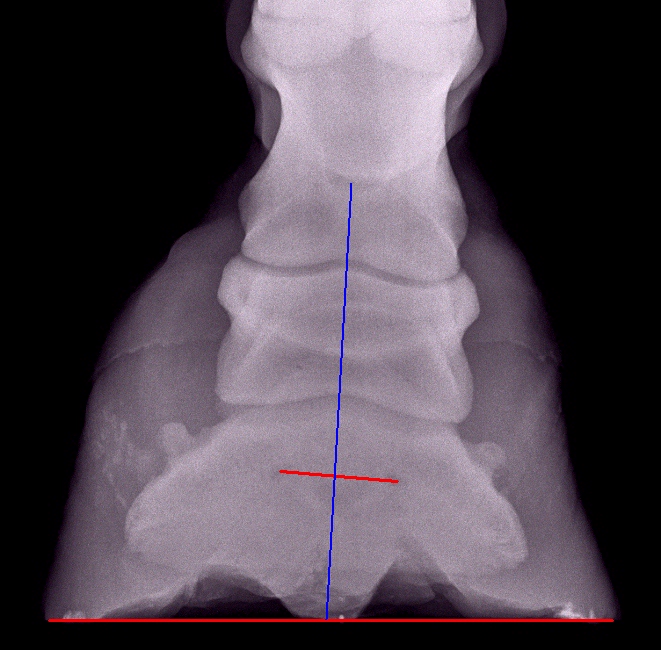
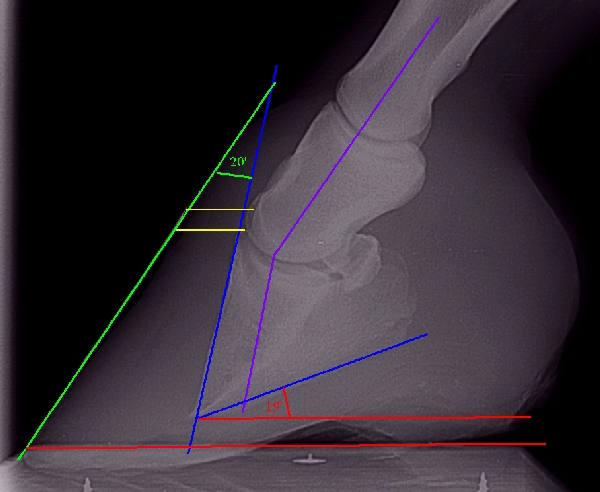
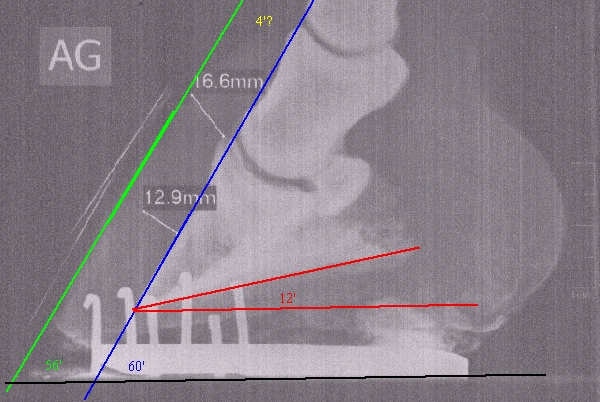
A palmar angle of 19 degrees - this is not healthy!
reduce the pull of the deep digital flexor tendon (DDFT) and thereby prevent rotation. Devices can be bought and fitted that will increase the palmar angle by as much as 18 degrees - that's much the same as the palmar angle in this x-ray - I struggle to believe that anyone can look at that and think it is healthy! Arguments about the effect, if any, of the DDFT in laminitis have raged for years. There is research to support surgically cutting the DDFT, a procedure known as tenotomy, but this research is usually from back in the days when horses with more than 11 or so degrees rotation were considered to have a poor prognosis (that is definitely not the case!), and reference is rarely (never?) made to a correct realigning trim having been carried out before the surgery. And it has to be said that if you look hard enough, you can find research supporting just about anything! 
Besides, surely tendons don't contract - wouldn't it be the muscle, if anything, that was affected - and wouldn't artificially raising the heel actually be likely to cause the muscle fibres to shorten - the very last thing we want - as recent research found in women who wear high heels a lot (High heels "shrink calf muscle fibres").

Dr Debra Taylor and Pete and Ivy Ramey address the role of the DDFT in their Hoof Rehabilitation Protocol article: "our therapy of laminitic horses is based on the concept that tension of the deep digital flexor tendon cannot result in stress to the laminae if the toe wall is not allowed to bear weight at impact, stance or during breakover. While tension of the deep digital flexor does exert a rotational force on P3, this force cannot oppose the laminae if the hoof wall remains out of contact with the ground." 
Pete Ramey elaborates on p 349 of Care and Rehabilitation of the Equine Foot (2011) - "if the sole at the toe is in ground contact, and the toe wall is out of ground contact"..., "force applied from the DDFT can have little or no effect on lamellar attachment." He reminds us that the sole must be padded, and goes on to say that whilst elevating the heels may temporarily reduce tension in the DDFT while the horse is standing, tension may actually be increased when the horse is moving, and that any relief will be transient anyway as the flexor muscle will quickly adapt. Pete says that in all the presentations he has seen where raising the heel has been advocated, he has never yet seen a hoof restored to health. And finally - sorry to quote you again, Pete, but this is so important (and why IMO anyone involved with laminitis rehab should buy Pete's book!) - "I believe that DDFT tension concerns have held back the veterinary and farrier world, preventing rotation reversal by leading people to stand P3 up on its tip and ultimately destroying the foot."
Picture
The ECIR group has this to say about raising the heel (www.ecirhorse.org - ddt-trim):
"There is really no proof anywhere that raising the heel does anything to prevent rotation. The theory of DDFT pull also fails to explain why horses with the most extensive damage sink or how sinkers can have a perfectly aligned bone column with no rotation at all. In fact, some sinkers are more ground parallel than before the laminitis. Raising the heel has negative effects long term by increasing the pressure on the tip of the coffin bone and accelerating bone loss." 

We now know thanks to research by Melody de Laat  (Insulin-Induced Laminitis - An investigation of the disease mechanism in horses 2011) and others that during endocrine laminitis (~90% of all laminitis cases), the laminar cells stretch, and it is likely that this weakening of the connection between the hoof wall and the coffin/pedal bone leads to laminar failure and rotation and/or sinking, exacerbated by the the horse's weight and perhaps poor foot balance. 
Picture

Hundreds of horses have been restored to health and returned to work following rotation by following the ECIR group's realigning trim - simply realigning the hoof to the pedal/coffin bone, with a palmar angle of usually no more than 5 degrees - and not a heel wedge in sight. 

The Laminitis Site has had the same excellent results in tens of horses - the x-ray above is of Sorrel, who was back in work within 8 months of a correct realigning trim (carried out according to emailed instructions!), after 7 years of laminitis - read her story here.
We have recently heard of a horse with laminitis, no rotation seen on initial x-rays, heel wedges fitted, then further x-rays revealed rotation - hopefully a correct realigning trim and barefoot rehab will restore this horse to full health - and hopefully this article will prevent this happening to other horses.

See more under DDFT. 
5 Comments

The Laminitis Site is now a charitable company!

26/6/2013

2 Comments

 
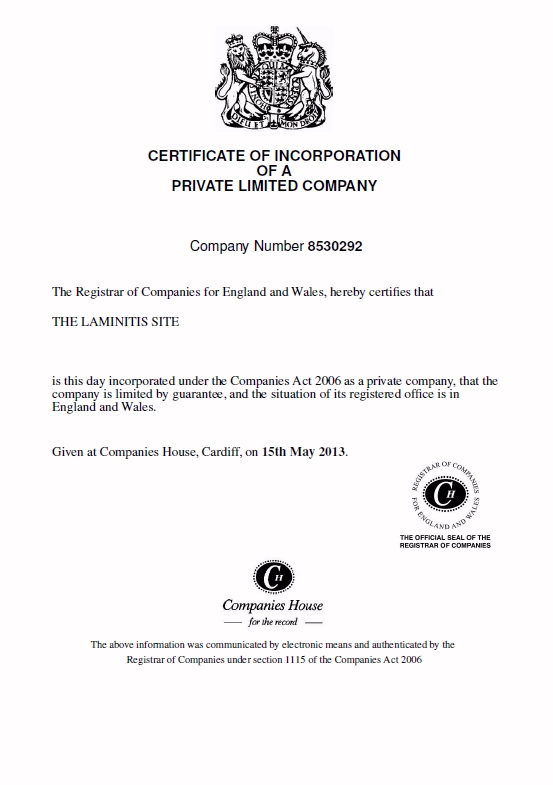
The Laminitis Site is now a charitable company (No. 8530292)!

In May The Laminitis Site was registered as a company limited by guarantee for charitable purposes with the following Objects:

1 To provide information and education on laminitis;
2 To fund and carry out research into laminitis and any related subject;
3 To care for and provide grants for the care of equids with laminitis.

In due course we plan to register with the Charities Commission, but for the moment we are being kept busy with laminitis cases and research, so fund raising and administration are on the back burner.

To date, all expenses incurred have been met by The Laminitis Site's founders, Andrea Jones and husband Martin Lefley - it is the philosophy of TLS that all information, advice and help is given free of charge and is available to anyone in need. However, requests to be able to make donations received from happy owners with rehabilitated horses led to the formation of the charitable company, and TLS is now able to receive donations, which will be used solely for the Objects listed above (Paypal Donate buttons can be found on most pages of the website).
Picture
The Laminitis Site thanks everyone for their support, and is looking forward to being able to help even more horses recover from and ideally avoid laminitis in the future!
Have you been helped by The Laminitis Site?

To support our application to become a registered charity, we have to demonstrate "public benefit". If you feel you have "benefited" - perhaps from information on The Laminitis Site website or Facebook page, from a reply by Andrea to a question on a forum or support group, or from direct help, either via the internet or in person, we'd love to hear from you - you can post on TLS Facebook, contact us or email thelaminitissite@
2 Comments

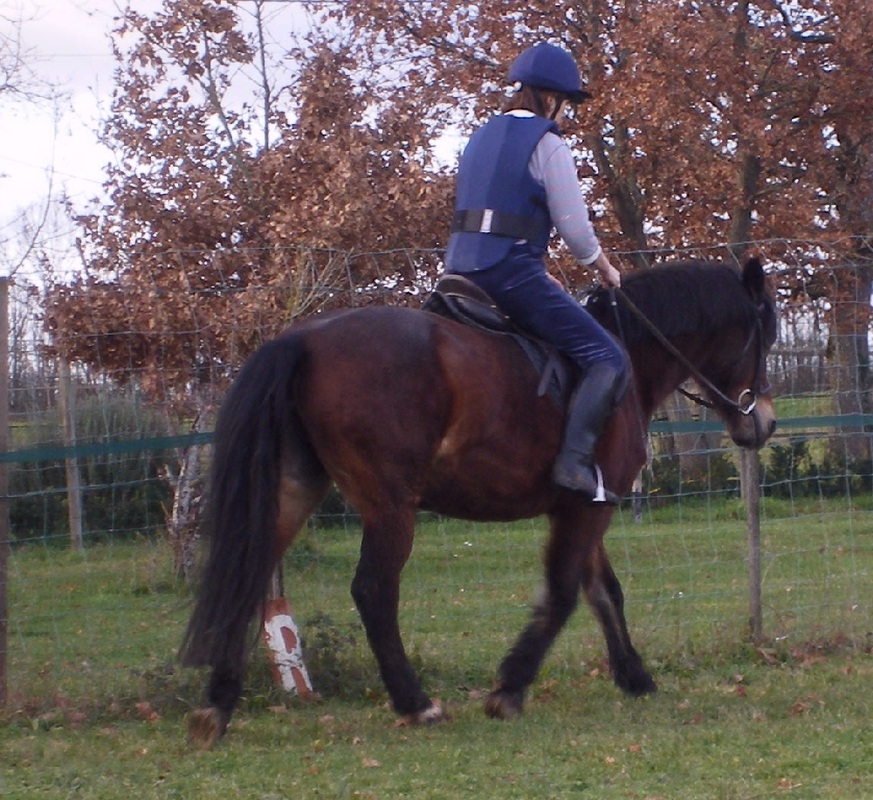
Izmir returns to work after laminitis in all 4 feet

25/6/2013

0 Comments

 
Picture
2 months after his laminitis, Izmir's rotation remained uncorrected - attention had only been paid to the toe, not the heel
Picture
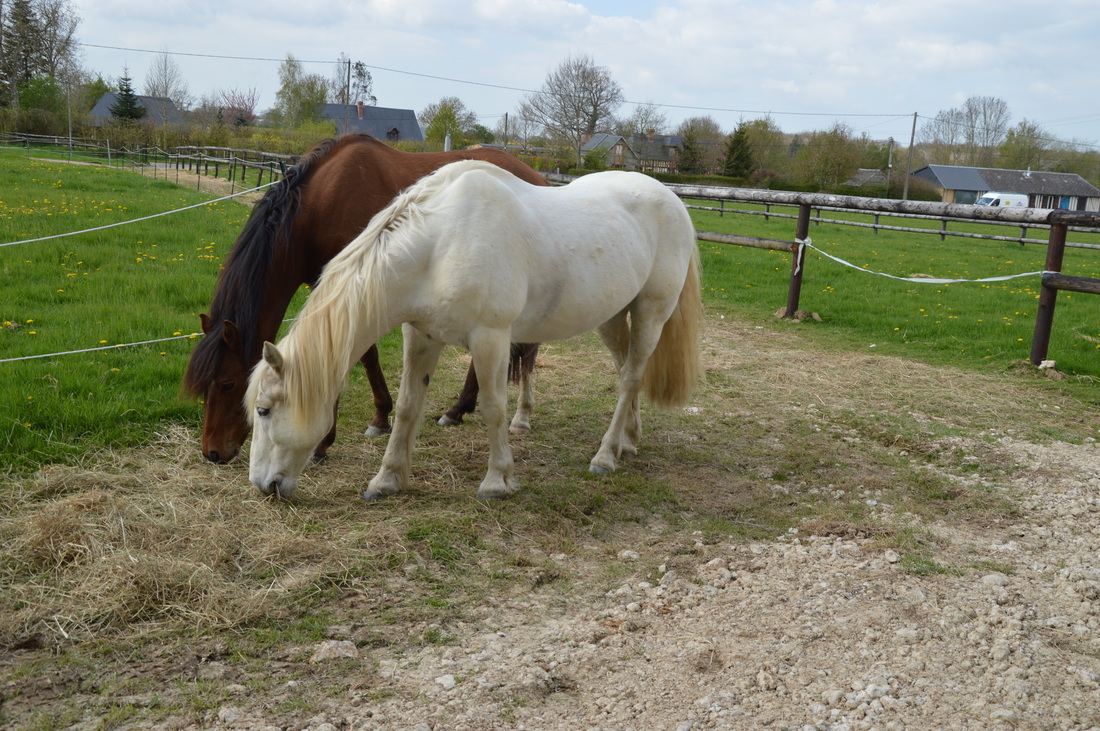
Izmir and friend on their track system
Picture
Spring 2013 - back in work following laminitis and rotation in all 4 feet


Email received from Joyce in France, June 2013:

"Izmir had laminitis in all fours with distal descent in December 2011. During the whole year of 2012, I was managed by "The Laminitis Site". Andrea counselled me in how to get his feet properly trimmed, which is not easy here in France. She was my life line during all those ups and downs, abscesses, hoof boots, trimming, diet, etc; giving me all the information I needed to get Izmir back to normal. 

I finally decided to have him de-shod on May 18, 2012, and a little over a year now, Izmir is back to normal, on a strict diet, and barefoot. We are working on trying to get his soles a little thicker, but I see progress every day. We go out on trail rides, just like we used to. He wears boots and can trot and canter like he used to. He is so happy, and he looks so much healthier than the days before his laminitis due to the diet he's been on: little or no grass, hay that is under 10% in sugar and starch, and minerals that are missing in his hay. 

If I hadn't met Andrea and The Laminitis Site, I don't know where we would be today: probably dealing with repeated laminitis, putting my horse in a field of grass or a dry paddock. I made a track going through his pasture, put down limestone and rocks to keep the grass at bay, and to harden his hooves, avoiding the winter mud. It has helped enormously. 

When I see him ridden by my grandchildren now, I know he has come a long way. Thank you, The Laminitis Site!
0 Comments
<<Previous
Forward>>
    Articles

    ​Laminitis, EMS or PPID - start here​
    ​Who said "stop the carrots"?
    ​Pituitary stress hormones
    ​Should pergolide be increased for the seasonal rise?
    ​
    Are you using illegal supplements?
    ​Body Condition Scoring
    ​
    Pituitary Pars Intermedia Dysfunction
    Equine Metabolic Syndrome and insulin dysregulation
    TTouch for laminitics 1
    Laminitis and the Feet

    La fourbure et le pied
    Laminitis, EMS and PPID
    Testing Insulin
    Cold Weather 
    Laminitis Rehabilitation – The Owner's Perspective
    Casareño's recovery
    P3 - the pedal/coffin bone/third phalanx
    Vit C and PPID

    Vetcare Webinars Andy Durham 2013
    Movement - good or bad?
    Pulsatility of ACTH
    Starting pergolide/Prascend
    ​
    Managing horses with PPID - Marian Little & Dianne McFarlane
    Is it PPID or is it EMS? 
    FAQ: Rehabilitating the feet after laminitis
    Diet for weight loss
    Please report adverse reactions to Prascend
    Splitting Prascend tablets
    Measuring Collateral Grooves
    General Laminitis Quiz
    Body Condition Scoring Video
    Video comparing PPID symptoms and normal aging
    McFarlane 2011 Equine PPID
    Pharmacokinetics of Pergolide Mesylate in Horses - Rendle et al. 2013.
    EVA foam pads

    Rehabilitating the Laminitic Foot - Scott Morrison DVM
    Anaemia and Iron Supplements
    Early symptoms of PPID.
    Don't raise the heel!
    The Laminitis Site is now a charitable company!
    Izmir returns to work after laminitis in all 4 feet.
    Trimming the laminitic horse.
    A balanced foot.
    The circumflex artery and solar corium necrosis.
    What do you know about PPID?
    Laminitis myths.
    Frosty grass = high sugar!
    There are no magic potions!
    Is injected pergolide more effective than oral?
    ​
    Risk Factors for Equine Metabolic Syndrome - Dr Nichol Schultz
    Fly free Homey pony.
    Sorrel's doing great!
    Celebrating Homer's results!
    The Horse.com Ask the vet live: PPID.
    If the bone moves - move it back!
    Always get a diagnosis!
    Horses with laminitis need pampering!
    Autumn is the best time to 
    test for PPID.

    Archives

    March 2019
    February 2019
    November 2016
    August 2016
    February 2016
    January 2016
    July 2015
    June 2015
    April 2015
    March 2015
    February 2015
    January 2015
    December 2014
    October 2014
    September 2014
    June 2014
    March 2014
    February 2014
    January 2014
    December 2013
    November 2013
    October 2013
    September 2013
    August 2013
    July 2013
    June 2013
    May 2013
    April 2013
    March 2013
    February 2013
    January 2013
    December 2012
    October 2012
    September 2012
    August 2012
    July 2012
    June 2012
    September 2011

    RSS Feed

Laminitis/EMS/PPID? Start here
Need help/support? Join FoTLS
Donate to help laminitic horses
Disclaimer: The information, suggestions and links (hereafter referred to as “information”) contained in this website are provided for information purposes only and should not be relied upon nor replace professional veterinary advice.  Information is non-veterinary, is based as far as possible on current research, does not constitute advice or diagnosis, and should be discussed in full with all relevant vets and hoofcare or other professionals.  No responsibility is taken for the accuracy or suitability of information contained in this website, and no liability accepted for damages of any kind arising from use, reference to or reliance on any information contained in this website.  If you suspect your horse has laminitis or is ill, please consult your vet. 
The Laminitis Site is a charitable company registered in England & Wales No. 8530292, recognized by HMRC as a charity for Gift Aid.  
The Laminitis Site France is an association registered in Charente, France No. W163004578.
Please consider making a donation to support the work of The Laminitis Site.
For more information and membership of the TLS support/discussion group, join Friends of The Laminitis Site.
The Laminitis Site's Privacy Policy.